Recording What I Never Said
Synopsis
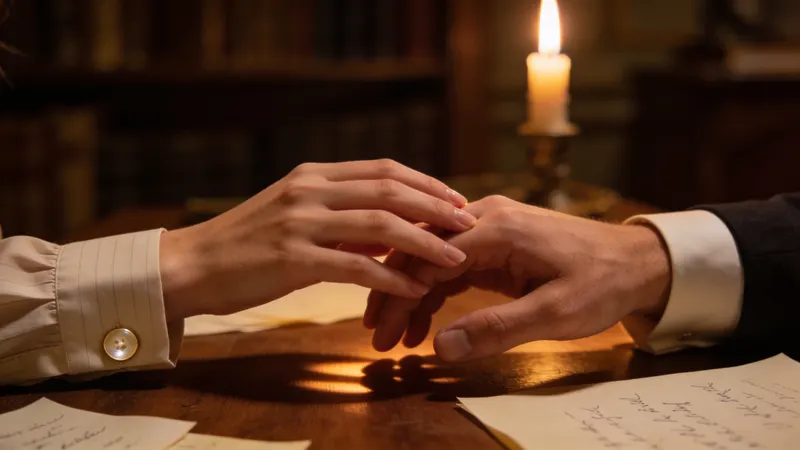
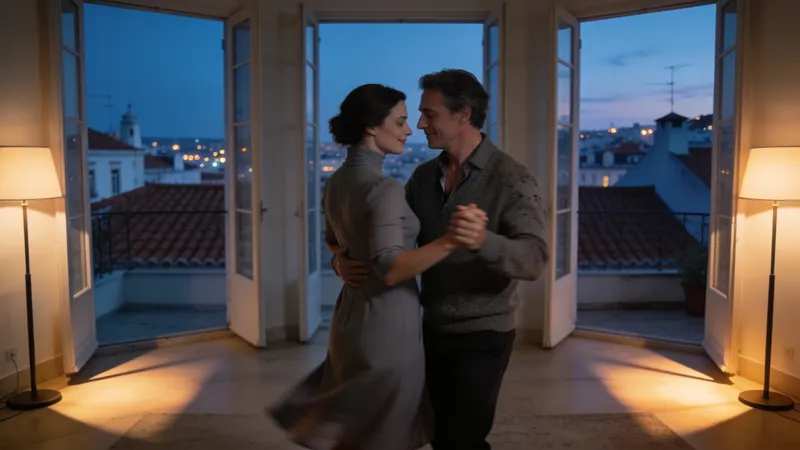
A confession-style, second-chance marriage story with slow-burn tension, explicit heat, and enthusiastic consent throughout. At forty-eight, you whisper your hidden desires into your phone at night, erotic confessions after 20 years of marriage, until your husband admits he listened to every recording and asks to bring each one to life with you, yes by yes.
What to expect
- Secret late-night voice recordings
- A husband who listened to every word
- Memories that turn out to be mutual
- Explicit, negotiated consent in a long marriage
- A grand piano, dusted off at last
Tropes: Slow burn, Second chance, Forbidden romance
Story details
| Chapters | 3 |
|---|---|
| Reading time | 16 min |
| Spice level | 5/5 |
| Rating | – |
| Reads | 0 |
| Status | Complete |
| Published | |
| Updated |
Chapter 1: Every Recording
You press record at one in the morning, the phone propped against the metronome you never wind anymore, and tell the dark what you have never once told your husband.
The brass is tarnished where your thumb used to set the tempo, back when tempo governed your whole life. Now it only holds the phone at the right angle, a small mute witness with a red light blinking against its flank.
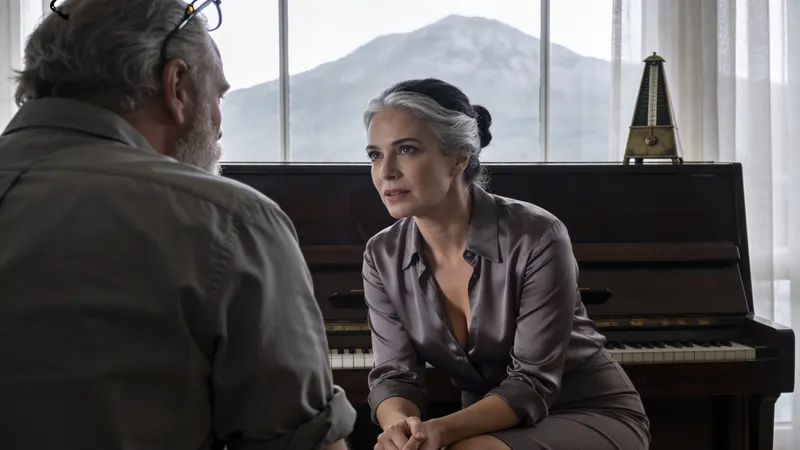
Behind you the grand piano keeps its long silence, dust gray on the pedals, the fallboard closed for months. You teach on the upright in the studio at the front of the house. This room, with its tall windows and the mountain pressed black against the glass, belongs to the hours when everyone is asleep.
At forty-eight, you have a ritual, and the ritual has a folder. Months of files, each one labeled only with a number, because even naming them felt too loud. You lean close to the little speaker and your voice comes out lower than the voice you use at dinner.
“I want to be asked out loud, in daylight,” you whisper. “Not guessed at, not assumed because we’ve been married twenty-two years and certain things are just what happens on a Saturday. I want him to say the words and wait for mine. I want to answer.”
The night air slides off the slope and through the gap in the sash window, cool on the back of your neck while your face stays hot. The folder has taught you that stopping is the only real mistake, so you keep going. You describe his hands. You describe being looked at, actually looked at, the way he used to look across a room before the years made everything efficient. You say the word “want” eleven times. You count later, listening back with the volume low.
Upstairs, the floorboards answer your footsteps with their usual small complaints, the third stair, the landing. You slide into bed with the care of a woman smuggling something.
Darius is awake.
He lies on his back in the dark, eyes open toward the ceiling, and he turns his head when you settle. Fifty-one years old, gray coming through his beard, the reading glasses still parked on top of his head where he forgot them.
“Long practice?” he asks, voice rough with the hour.
“Couldn’t sleep,” you say.
He hums something neutral and reaches over, and his palm rests warm and heavy on your hip, the way it has rested there ten thousand nights, a habit, a good one, a quiet one. You lie very still and wonder how sound travels through this old house, whether whispers carry through floorboards, whether the mountain keeps what it hears.
The next evening he comes home from the bridge site early, and you know something is wrong before he takes off his boots, because he is holding your phone.
He stands in the kitchen doorway with it in his broad hand, site dust still pale on his cuff, the pencil stub behind his ear. The kettle you put on for his tea starts its slow build toward boiling, and neither of you moves toward it.
“I borrowed it at lunch,” he says. “My battery died, I needed to call the structural engineer. Your folder opened.”
The kitchen gets very large around you. The table where you have eaten a lifetime of quiet dinners sits between you with two place mats and a bowl of lemons, and your heartbeat ticks in your fingertips, in the callused pads that spend their days on other people’s wrong notes.
“How much?” you manage. It isn’t quite a question.
“All of them.” His voice stays level, the site-meeting voice, the voice that delivers bad load calculations without flinching. His hands are not level. The phone trembles, very slightly, against his palm. “More than once. Three weeks, I’ve been listening at night after you fell asleep. I know I should have said something the first day. I couldn’t stop.”
Three weeks, and you do the arithmetic of shame, and it comes out wrong, because there is no anger in his face. There is something worse, or better, something unarmored, the look of a man standing at the edge of a span he isn’t sure will hold.
“Say something,” you whisper.
“I want to bring them to life.” He sets the phone on the table between you, face up, like an instrument. “All of them, any of them. Together. Both of us saying yes, every time, nothing assumed, nothing taken for granted because of a ring or a mortgage or twenty-two years.” He pulls out a chair and sits, slowly, as if the room were scaffolding. “You asked the dark to be asked out loud. So I’m asking out loud, in the kitchen, with the light on.”
The kettle reaches its boil and clicks off, and neither of you looks at it.
“You listened to everything,” you say. Your mouth is dry. “The ones about your hands. The one about the garden wall at the old flat.”
“The garden wall,” he repeats, and something crosses his face that you will think about later, something almost like recognition, too quick to catch. “I remember the garden wall.”
You brace for the shame to arrive, the hot flood of it, and it doesn’t come. What comes instead is stranger: a loosening somewhere under your ribs, a phrase you’ve been holding at half tempo for years suddenly allowed its real speed. Your husband of twenty-two years is asking you to want him, in words, and waiting.
He reaches for the phone. “May I?”
Your nod is small, and he shakes his head once, gently.
“Words,” he says. “That’s the whole point, isn’t it. That’s what you asked for.”
“Yes,” you say, and the word comes out steady, the steadiest thing about you. “Play it.”
He opens the folder. His thumb finds the most recent file, the one from last night, the one you recorded twelve feet below where he lay awake, and he presses play.
Your own whispered voice fills the kitchen, thin and intimate from the small speaker, absurdly naked in the room where you have passed him the salt a thousand times. I want to be asked out loud, in daylight. I want him to say the words and wait for mine. I want to answer.
Then your voice describes his hands, and his hands go still on the table, and he does not look away from you, not once, while your secret speaks for you in your own voice.
The recording ends. The house holds its breath the way it holds everything. the mountain leaning at the windows, the brass metronome waiting in the other room, unwound.
Darius leaves his thumb hovering over the screen, over the whole numbered archive of your wanting, and he looks at you with his reading glasses still forgotten on his head and his engineer’s patience stretched thin over something that is not patience at all.
“Is it still true?” he asks. “Everything you said in there. I need the words. Not a nod.”
And the words rise in you, all of them, the whole unsaid score of twenty-two years, as his thumb waits above the glass.
Chapter 2: The First Recordings
“Yes,” you say. “It’s still true. All of it. I want to be asked, and I want to answer, and I want you to keep asking.” The words come out of you like a passage finally played at tempo, and Darius exhales, a sound you have not heard from him in years, something between relief and a laugh caught short.
“Good,” he says. “Then we do this properly. One at a time.”
That is how it begins: with the two of you at the kitchen table after dinner, his hands still nowhere on you, the way you once worked through the hard pages of a score. One file a night. He washes the dishes, you dry, and then the phone sits between you on the wood and you press play together, your own whisper filling the room, and neither of you looks away.
Some nights you only listen. Some nights he asks a question afterward, quiet and precise, and you answer it, and the answering is its own kind of undressing.
By day nothing changes. The students come at their hours, adults with careful hands and busy lives, and you correct their phrasing in the sunlit studio while the metronome ticks for them, wound for lessons and never for you. Your body keeps teaching time while your mind runs ahead to evening, to the next file, to the man who will be waiting at the table with his reading glasses on his head.
The discipline of daylight makes the nights feel illicit, as if the house itself has agreed to keep your secret a second time.
On the fifth night you reach the bottom of the folder, the earliest files, and the dates stop you. Year three of your marriage. You were twenty-nine. You press play before you can think better of it.
Your younger voice comes out of the speaker, hesitant, almost inaudible, and it is not describing a fantasy at all. It is describing the garden behind the old flat in Gardens, the wall of the building rough against your shoulder blades, his mouth on your neck, the neighbors’ radio playing some bright kwaito song through an open window. Your own whisper says it plainly: his hands were shaking and he still asked, he always asked, and I said don’t stop, don’t you dare stop.
Your face burns. You had forgotten what the first recordings were. You had thought you were confessing wishes, and instead you were confessing memories, moments you were certain he had walked through without seeing.
“It had rained,” Darius says, low. “That afternoon. The paving was still wet and the whole garden smelled of it. You had on that green dress with the buttons you hated.” He is looking at the table, tapping two fingers on its edge, a silent calculation. “And what you whispered, what you actually whispered, was my name. Twice. The second time like a question you already knew the answer to.”
The room tilts. Twenty-two years you believed that afternoon belonged only to you, a private recording you carried alone, and here it is in his voice, kept, dated, exact.
“You remember all of it,” you say.
“I remember everything,” he says. “That’s the problem I never told you about. I thought you didn’t want to know I was paying that much attention. I thought wanting you that loudly would crack the load path.” His mouth twists at his own engineering joke. “Turns out the silence was the crack.”
So that is what the quiet was: two people standing on either side of a wall, each certain the other had stopped listening.
“What else?” you ask, and your voice is not steady now. “What else did you see?”
The next night you answer your own question by choosing. You scroll past the recent files, the aching ones, and stop on a small one from year six: the kitchen of this house, late, the two of you still young enough to leave dishes for morning. Your recorded voice says simply: he kissed me against the counter and I wanted it to go on for an hour.
“This one,” you say, and set the phone down. “I want this one back.”
Darius stands and comes around the table slowly, giving you every meter of the distance to change your mind. You do not. You meet him standing, and his hand comes to your jaw, warm, broad, steady until it is not, until the fine tremor in his fingers betrays what his voice never shows.
“Tell me the limit,” he says. “Tell me where to stop. I’ll hold to it exactly.”
“Slower than that,” you say, and your musician’s precision takes the words for you. “Like a slow movement, with no rushing the phrase, and ask me. Keep asking me.”
“Like this?” His mouth brushes the corner of yours, a quarter note of a kiss.
“Yes. Again.”
He asks with every step, and you answer with every step, and the answers get shorter as your breath does. His mouth finds your neck and your head goes back against the cupboard door, and twenty years collapse into the space between his thumb and your pulse. Your blouse comes open one button at a time, each one a question, each one answered.
Your hands find the gray at his temples, the pencil stub still behind his ear, and you laugh into his shoulder because of course he brought the site home with him even now. The laugh breaks open something in your chest that has been shut for years.
“Here,” you whisper, guiding his hand. “There. Stay.”
“Here?” His palm is warm through the thin fabric, patient, exact. “Tell me if the tempo changes.”
“It changes if you stop,” you say, and he laughs once, quietly, the sound vibrating against your collarbone, and for a while the kitchen is somewhere else entirely, somewhere with a pulse, far from the room of ten thousand quiet dinners.
His mouth is at your ear and your hands are at his belt when he goes still, listening, held in place by something he has heard.
“There’s a gap,” he says against your skin. “In the dates. Between year nine and year eleven, the numbering jumps. There’s a file that isn’t here.”
Everything in you closes like a fallboard dropped over keys. You know the one he means. The one you recorded and never finished, or finished and never kept, you can no longer remember which, only that it holds the wanting you have never said in any voice, the one that would prove what you have always suspected: that you are too much, that your desire at full volume is more than a good marriage can hold.
“Not that one,” you say, and your hands are shaking as you reach for the phone and close the folder, the screen going dark between you.
Darius steps back at once. He offers no argument and lays no disappointment on you, only his breath coming a little fast, his eyes steady on yours.
“All right,” he says. “Not that one.”
He picks up the phone from the counter and carries it into the music room, and you follow because you cannot not follow, your blouse still open, your heart still at double time. The grand piano waits in the dark, the tall windows holding the black slope of the mountain, the brass metronome unwound on its shelf.
Darius sets the phone face up on the closed lid of the piano, where the dust has not been disturbed in years, and the screen glows faintly, one file’s absence like a rest in a score, a silence with a shape.
“When you’re ready,” he says. “That’s the whole sentence. There’s no date on it.”
He kisses your forehead, once, unhurried, and goes up the stairs, and his footsteps are the measured sound they have always been, a man who knows exactly what a structure can bear and refuses to test it past your word.
You stand alone in the music room while the house settles around you. On the piano the phone waits, face up, patient as a metronome, and behind its dark glass the unheard file keeps its single question, waiting for the night you let him hear the wildest thing you want.
Chapter 3: Both of Us, Out Loud
The last of your adult students leaves at half past five, a retired actuary working through Chopin at sixty-one, and for once you do not sit down to write notes on the lesson. You stand in the empty studio with your phone in your hand, and the light through the tall windows is still full and gold, the kind of light you have spent twenty-two years believing desire could not survive.
Darius is already in the music room. You find him among the windows with his glasses pushed up on his head, pretending to read a site report, and he looks up when you set the phone face up on the piano lid, exactly where he left it the night before.
“It’s still light out,” he says.
“I noticed.” Your voice is steadier than your hands. “That’s the point.”
You press play before you can arrange your face. The recording is dated four months ago, and your own whispered voice fills the room, thin at first, then gathering itself.
“I want it in daylight,” the voice says. “I want the windows open and the street below and somebody who might hear. I want him to ask me out loud, and I want to answer out loud, no whispers, nothing hidden. I want to be wanted where anyone could know it.”
The file ends. The room goes very quiet except for a dove somewhere on the slope and the far murmur of Kloof Street.
“That’s the one,” Darius says. His hands are trembling, the pencil stub still behind his ear like the most absurd thing in the world. “That’s the wildest thing you want?”
“Isn’t it?”
He laughs, a short breath, and some of the trembling leaves him. “I thought it would be something I’d have to train for.”
“Darius.”
“Windows first,” he says, already moving. He lifts the sashes one by one, three tall windows open to the late summer air and the street below, the mountain gone green-gold in the evening. Cool air slides in off the slope and raises gooseflesh on your arms, and the exposure of it, the sheer unhidden daylight of it, sets your pulse beating in your throat.
“Before anything,” he says, and pulls his own phone from his pocket. “There’s a file on mine. I recorded it three weeks before I told you about the folder. I haven’t played it for anyone.” His thumb hovers. “May I?”
“Play it.”
His voice comes out low and rough, a man talking to his phone in the dark of the spare room. “I found her folder tonight. I listened to one. Then I listened to all of them, and now I can’t stop, and every night I lie next to her knowing what she wants and not knowing how to say I want it too.” A long pause, a breath. “I want her so much I’m afraid of it. I’m afraid wanting at this load will crack something I can’t repair. Twenty-two years and I’m scared of my own wife’s voice. Some engineer.”
The file ends, and you are both standing in daylight with your confessions played back to back, two people who spent years whispering into separate silences at the same time.
“You listened every night,” you say.
“Every night. Green means go, doesn’t it? Tell me the color.” His engineer’s care, asking the way he checks a span. “Tell me the limit. Tell me when to stop.”
“Green,” you say. “And slower. I’ll set the tempo.”
He winds the metronome first, because you both know why, and sets it slow, and the small brass tick fills the room like a pulse the house has been missing for years.
He asks at every threshold, and you answer in your two languages, his “like this?” against your “slower, again, there,” and once you both break into laughter when the bench shifts and the metronome keeps its patient time regardless, which only makes you kiss him harder. His shirt comes off, then yours, and his hands are steady on you now, steadier than you have ever known them, unbuttoning, unhooking, one palm warm on the bare skin of your back while the street below goes on with its evening.
“Windows open,” he murmurs against your neck. “Out loud, you said.”
“Out loud,” you confirm, and when his mouth moves lower you do not whisper his name. You say it at full voice, and the saying of it undoes you more than his hands do.
He lays you back against the closed lid of the piano, and the old wood answers with a faint sympathetic hum from the strings inside, the instrument itself sounding for the first time in years. “Color?” he asks, poised above you, and you pull him down and say “Green, green, don’t stop asking,” and he comes into you slowly, in the metronome’s time, and you move together in daylight with the windows open and your voice saying yes, yes, again, every escalation asked and answered until the asking itself becomes its own language, his low check-ins, your musical directions, faster now, don’t you dare stop, and his hands braced on the lid beside your hips trembling only at the very end, when yours are trembling too.
After, you sit on the bench wrapped in his shirt, your legs not quite reliable, and the room smells of disturbed dust and warm skin and the evening air coming off the mountain. The dust on the pedals is smeared where your foot dragged, one clean arc through years of stillness, and you look at it for a long moment.
“Your turn to be brave,” Darius says quietly, and nods at the fallboard.
You open it. The keys are cool under your callused fingertips, and your hands shake harder than his ever did.
You have taught a hundred adults to stop fearing this moment, and you have avoided it yourself for two decades. This is the piece you never once played with abandon, the one that only works if you give it everything.
The first bars come out careful. Then something in you stops measuring, the tempo loosens, and you play it the way you played before you learned to be careful, loud and unguarded and alive, and the sound pours out of the open windows and down the Oranjezicht slope like it has somewhere to be.
When you finish, Darius is standing with one hand flat on the piano and his eyes wet, and neither of you says anything for a while, because the quiet in the room is no longer empty. It is the other thing. The shared kind.
Later you set the phone face up on the piano lid, in its old place, and open a new recording. You label it with both your initials and the number one, and beside it, the metronome is still wound, still ticking, left set for the next one.
You press record. And this time, Darius speaks first.
The end
Editorial collection: The Half-Light Collection
Related stories