Midnight at the Nile Pool
Synopsis
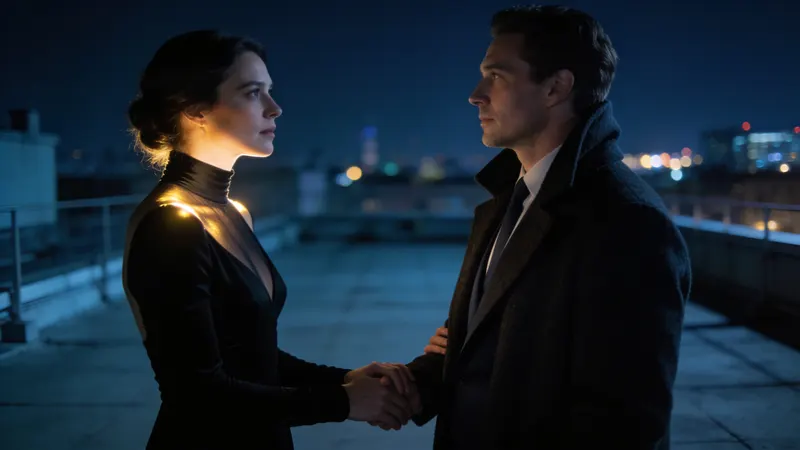
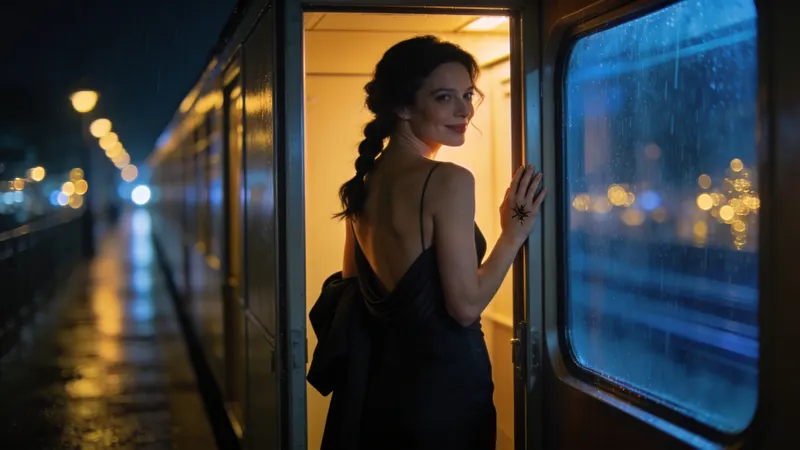
An erotic story of exhibitionism and voyeurism, following a 49-year-old Egyptian-French art curator who swims alone at midnight in Cairo. Across the Nile, a retired architectural photographer watches in silence. Their wordless exchange—through glances, notes, and moonlight—sparks a slow-burning, explicit and consensual intimacy that becomes her erotic awakening.
What to expect
- Second-person immersion: you are the curator in the water
- A silent exchange of gazes across the Nile that builds night after night
- Notes carried by boatmen and a deferred midnight decision
- A reveal that reframes the watching as recognition
- Explicit, consensual intimacy on a moonlit terrace
Tropes: Strangers, Slow burn, Vacation fling, Sexual awakening
Content notes: backstory grief for a deceased spouse
Story details
| Chapters | 3 |
|---|---|
| Reading time | 18 min |
| Spice level | 4/5 |
| Rating | – |
| Reads | 0 |
| Status | Complete |
| Published | |
| Updated |
Chapter 1: The Water Remembers
You unlatch the villa’s rooftop gate at midnight with your swimsuit still folded over your arm, because the house rules forbid swimming alone after dark and you have spent forty-nine years learning which rules were written for other people.
The number still surprises you when you say it out loud. You turned forty-nine in the spring, in a Paris office with a cake your assistants were too polite to light candles on, and what rose in you that day was not loss but permission, as if something in you had finally stopped asking.
The heat up here has a texture, dry and grainy, the last of the day stored in the stone tiles under your bare feet. Cairo hums below and across the water, a low animal sound of traffic and distant music that never fully stops. The villa belongs to the museum’s foundation, and you arrived this afternoon with two crates of installation plans and a week of work ahead, hanging the exhibition that brought you across the Mediterranean. The housekeeper, a watchful woman named Soad, walked you through the rooms and ended the tour at this gate.
“The pool,” she said, and pointed at the dark rectangle of water spilling toward the river view. “Beautiful. But not alone at night, madame. That is the rule.”
You asked what would happen. She shrugged with her whole shoulders. “Nothing, probably. That is why it is only a rule.”
So here you are, alone at midnight, breaking it.
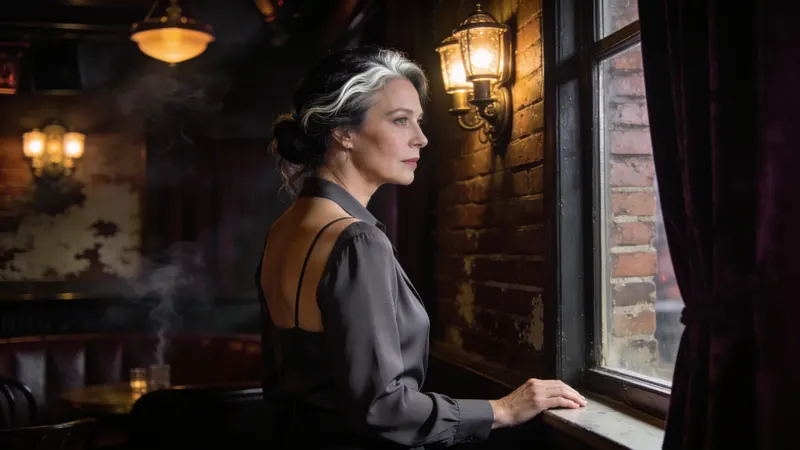
The infinity edge faces east, toward the Nile, and the river is wide enough here that the far bank reads as a suggestion rather than a place: a scatter of lights, the black silhouette of an old Ottoman house with a crumbling terrace, its wooden balconies leaning like tired shoulders. Nothing overlooks you. The neighboring rooftops sit lower, their parapets high, and the villa’s garden walls close off every sightline from the street. You checked all of this before you climbed the stairs, because checking sightlines is what you do. Three decades of deciding how other people’s work is seen, where the light falls, what the eye meets first, have taught you how to read a room for its gazes.
You set the folded swimsuit on a lounge chair. Then you stand there a moment with your hands at the hem of your cotton robe, and you do the arithmetic of privacy one more time, and the answer comes back the same: no one.
The robe drops. You unclip your watch, your earrings, the thin chain at your throat, and lay them in a neat row on the chair’s arm, a curator’s habit, everything cataloged. Your fingers go to the silver anklet above your left foot and stop there. That one you never remove. You bought it in a market in Fez twenty years ago, and it has outlasted two apartments and one marriage, and taking it off would feel like leaving a part of your skeleton on the chair.
The water takes you like warm hands.
You go in slowly, down the steps, and the heat of it climbs your calves, your thighs, your belly, and by the time it closes over your breasts your breath has gone somewhere you have to chase. The pool is unheated and still warm from the day, almost body temperature, so that after a minute you lose the border of yourself. You push off and float on your back, salt-and-pepper hair fanning loose in the water, and the desert sky is enormous and pricked with faint city-dimmed stars.
A sound comes out of you, low and unguarded, the kind of hum a body makes when it remembers it owns pleasure. You cannot recall the last time you heard it.
You swim the length of the pool underwater and surface at the infinity edge, resting your arms on the stone lip, your bare back and shoulders above the waterline, the river spread out in front of you like something arranged for your private viewing.
That is when the light catches your eye.
On the far bank, on the terrace of the old Ottoman house, a small lantern burns where you are fairly sure no lantern burned before. Beside it, catching that light, a dull glint of metal: a tube, a tripod, perhaps. Your eye, trained by decades of framing, assembles the shape before your mind agrees to name it. A telescope.
Your first move is pure reflex. You sink to your collarbones, arms crossing over your chest under the water, and the curator in you arrives furious and fluent. An unframed gaze. Someone looking at you from outside every arrangement you made, without your permission, without a wall text. You are already calculating the distance to the steps, to the robe, the angle of retreat that keeps you covered.
You do not retreat.
You stay where you are, treading water, and you look at the lantern, and the lantern just burns, patient, unhurried, while something moves through you that is not fear. The river is four hundred meters wide here, maybe more. Whoever stands behind that glint of metal can see the pale shape of you in the water, the loose dark-and-silver of your hair, the line of your shoulders above the surface. Nothing more. A distance that cannot touch you. A gaze that cannot reach.
And the strangest thought arrives, quiet and fully formed: it does not feel like theft. It feels like being read.
You have been looked at all your life and managed every second of it. Galleries, openings, panels, dinners, your face arranged, your body dressed with intent, every gaze one you had already framed before it landed. This is the first looking you did not arrange. And instead of violation, what your body reports is heat, a slow bloom low in your belly that has nothing to do with the water.
You know you should get out. Instead you push off the edge and swim one more lap, unhurried, breaststroke, your back rising from the surface with each stroke. Half of you is performing and you know it, and the other half is testing, asking the dark a question: are you still there? You roll onto your back again at the far end and let your arms float wide, and the night air moves over your wet skin, over your nipples tightened against it, and the hum comes back, lower this time, and you let it.
When you finally climb out, you do not hurry. Water sheets off you onto the warm stone. You could crouch, wrap the robe quickly, duck inside like someone caught. Instead you stand at the pool’s edge facing the river while you wring the water from your hair, and only then do you lift the robe and draw it over your shoulders, slow, as if the night itself were helping you dress.
Downstairs, sleep refuses you. You lie in the big bed with the ceiling fan stirring the heat while your skin keeps reporting the water, the watching, the same touch, until you give up and go looking for the villa’s library, a narrow room of left-behind books in four languages.
Your hand stops on a clothbound spine, “Cairo’s Vanishing Domes” by K. Nasser, and you carry it to the lamp and turn the pages slowly. Photographs of domes and minarets taken at dawn and dusk, decades of a city being unbuilt, and the framing is so patient, so loving, that you find yourself leaning closer. Whoever made these pictures adored what he looked at. You can tell. It is in where he stands, how long he was willing to wait for the light. You register the name on the spine the way you register a face you are sure you have never met: nothing.
You set the book back and go to the window instead, the one that faces the river.
The terrace across the water is a black cutout against the sky, but the lantern still burns. You stand there with your damp hair cooling your neck, and you are about to turn away when it happens.
The lantern flares. Once. A bright deliberate swelling of the flame, then steady again.
Wind flickers, and this was not wind; this was a hand, a sleeve lifted, a signal. You stand very still, your heart going hard and slow, and the understanding arrives all at once and does not frighten you at all: he knows you saw him. He watched you stay. And that single flare is his answer to the question you swam across the pool asking.
You do not close the shutters.
Chapter 2: What the Dark Allows
You leave the shutters open all night, and in the morning the room is full of river light, and you have slept better than you have in months.
The second night you tell yourself you will not swim. You say it out loud while brushing your hair, testing the sentence for conviction, and the sentence has none. One night of being seen, and already the day has become something to get through: the exhibition meetings, the condition reports, the curator’s voice you use with customs officials, all of it a corridor leading to midnight. At eleven you are reading the same page for the third time. At midnight you are at the rooftop gate, and the swimsuit is not in your hand because you left it on the bed the way you would leave a coat in a house you are never coming back to.
The lantern is already burning across the river.
You unclip your earrings, your watch, the thin chain at your throat, and lay them on the chair in a careful row, everything except the anklet, the silver one that has been on your ankle so long it sits there like a joint. Then you step into the water and it takes you the way it did the first night, warm as breath, and you swim one slow lap before you let yourself look.
He is there, or the looking says he is. You cannot see him, not really, only the terrace and the lantern and the dark shape of the old house behind it, but the looking has a direction now, and it lands on your wet shoulders like a hand placed flat between them.
Something has changed, and you understand it while you float on your back with the stars wheeling overhead: the first night you were discovered, but tonight you are choosing. You arch your spine and let the water lift you; your breasts break the surface, and you do it slowly, the way you would light a room for an opening, deciding what the light falls on. You have spent thirty years arranging how things are seen, and the skill works on yourself. The control you always needed turns out to be the thrill itself, not its opposite. You are framing his gaze. You are offering it.
At the far edge you surface and rest your arms on the stone, facing him, and let the water do what it wants with the rest of you.
On the fourth evening the caretaker, Sami, finds you at dinner and sets an envelope beside your plate with the particular neutrality of a man who delivers things by boat and asks nothing. “From across the river, madame,” he says. “The boatman brought it.”
Your hands are steady when you open it, and later you are proud of them for it, that they were steady.
Inside there is a jasmine flower, pressed flat and still faintly breathing its scent, and a page of careful English in a hand that draws its letters the way a draftsman draws.
“You move in the water the way calligraphy moves. Not written for anyone, and yet impossible to look away from. I have watched buildings for forty years and I thought I knew what patience was. I did not. Understand this, because it matters more than the rest: the watching ends the moment you wish it. Leave the lantern question unanswered one night, and I will close the terrace and be grateful for what you already gave. You owe me nothing. The water owes me nothing. I only wanted you to know that what you do at midnight is the most alive thing I have seen in years.”
It is unsigned, and you read it four times at the table and once more in bed, and the ache it makes is not in your chest, or not only there. Every rule you own says an unseen man who writes to you about your body is a man to report, to flee, to frame, and hang as a warning. And yet the letter is the least dangerous thing anyone has ever sent you, because it hands you all the power and asks for none of it.
You find paper in the desk drawer and write back before your caution can assemble its arguments.
“The water is warm and the night is wide. Watch if it feeds you. I will tell you when to stop, and I do not want to stop.”
In the morning you give it to Sami, and your voice comes out level even though your pulse is not.
The notes begin to cross the river with the boatman, one every two or three days, and they become the truest correspondence of your life. He writes that he has not wanted anything in years, that he had forgotten the machinery of wanting, the way it hums, the way it makes the rest of the day feel like a waiting room, and he writes it without apology, which undoes you more than any compliment could. You write back things you have never said to anyone’s face: that you turned forty-nine in the spring and believed your body had quietly retired from being wanted that being watched from a distance too far to touch has woken a hunger you thought you buried decades ago under openings and acquisitions and good tailoring. That you think about his eyes on you in the middle of meetings and have to set down your pen.
One note from him is only two lines.
“May I keep watching? Answer plainly. I want the word, not the silence.”
You write the word so large it crosses the page. Yes.
That night you do something you have never done: you light the two hurricane lamps on your own terrace, the ones Sami uses when he cleans the pool, and you set them at the pool’s edge where the light is kindest, and you stand naked in it with the water dark behind you and the anklet catching a small bright thread at your foot. You do not pose, not exactly. You stand the way you stood at your first exhibition, terrified and unwilling to leave, and you let him see all of you, the softness, the weight, the years, everything you have spent a career keeping on the far side of the frame.
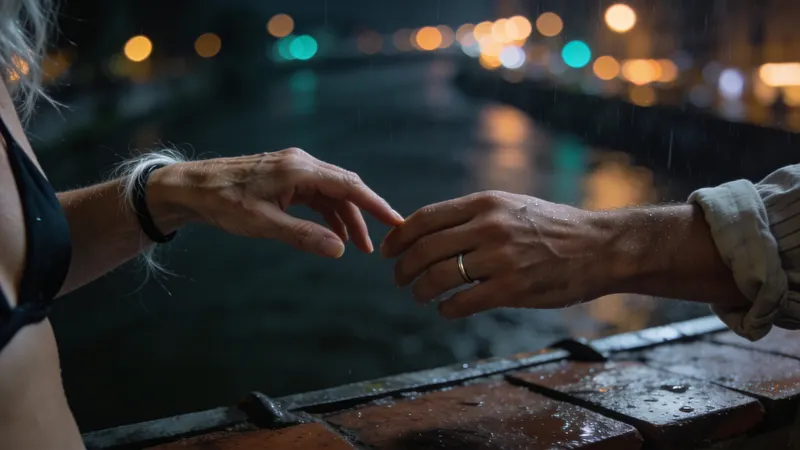
Across the river, the lantern flares. Once, and then again, and the second flare lands like a hand closing around yours.
His last note arrives on a Friday, and it is longer, and it changes the shape of everything.
“Come across at midnight, if you want to. The boatman knows the way and he is discreet and he is paid either way. My name is Karim Nasser, and you should have it before you decide, because a name is a door you can knock on or walk past. If you do not come I will understand completely, and the watching will end with nothing in it but gratitude. You have already given me back something I thought was gone for good.”
Karim Nasser.
The name sits in your hands and hums. You know this name. You have known it for days without knowing, the way you know a room you have only seen in a photograph. In the library you take down the clothbound book, “Cairo’s Vanishing Domes,” and turn to the back, to the photographer’s bio, and there is the small portrait, a lean weathered man with silver at his temples, and the paragraph beneath it mentions a Paris exhibition, a retrospective of the domes, years ago.
Your exhibition, you are almost sure. The certainty is one floor down, in your luggage, in the catalog you wrote and cannot bring yourself to fetch, because once you fetch it, the man across the river stops being a stranger, and you are not ready for what he becomes instead.
Midnight comes the way it always comes now, faster than you want.
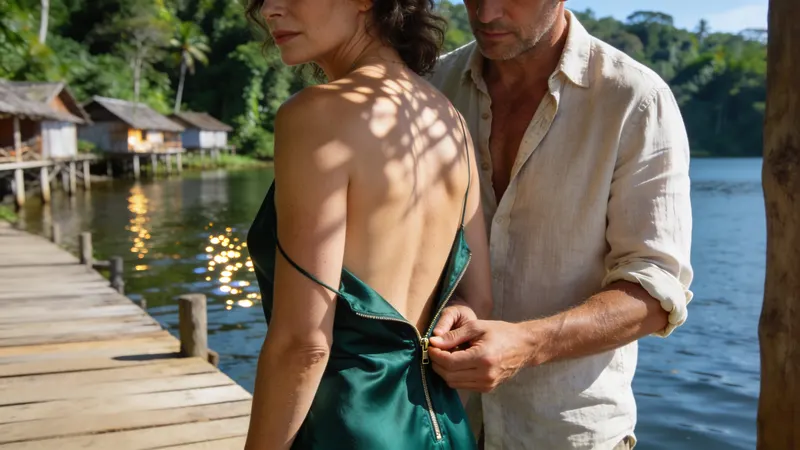
You are at the villa’s private dock with your sandals in your hand and a linen dress over nothing, and the Nile is black and wide and moving. The boatman sits in his wooden felucca with the small engine idling, patient as furniture, his face turned politely toward the far bank. Across the water the lantern burns on the old terrace, steady, waiting, and below it you can just make out the pale line of worn stone steps coming down to the water.
The boatman looks at you and does not ask. He only waits, one hand on the tiller, the river slapping the hull in no hurry at all.
You have not stepped into the boat.
Chapter 3: The Other Bank
You step into the boat, and the felucca rocks under your foot until the boatman steadies it with one rope-burned hand, still not asking. Then the engine swallows its own sound and the bow turns into the current. The Nile at midnight is not black the way you thought from the terrace. It is brown and breathing, warm-smelling, carrying the night’s heat off the city in a smell of silt and diesel and something green underneath. On the wooden thwart, you sit with your sandals in your lap and your linen dress over nothing, and your heart is so loud you are certain the boatman can hear it over the engine.
The crossing takes four minutes, and it takes a year. The lantern on the far terrace grows from a star into a lamp into a light that has a man’s shadow moving inside it, and then the hull noses against worn stone steps that come down into the water, green with river slime at the lowest tread. Barefoot, you climb, and the silver anklet you never remove catches his lantern light as you rise, a small bright signal you chose without choosing.
He is waiting at the top of the steps, and the first thing waiting with him is the telescope. It stands on its brass tripod near the parapet, capped, collapsed, turned deliberately toward the wall and pointed at nothing. The offering is so clear it nearly undoes you before he says a word.
“Tonight,” he says, “only my own eyes.”
His voice is lower than the one you invented for him. He is lean and weathered, silver at the temples, a linen shirt open at the collar, and you know his face. You knew it from the portrait in the book, but standing here you know it from farther back, from a vernissage in Paris, white wine and wet coats, a quiet man at the edge of his own retrospective while a room full of people praised his domes.
“Karim Nasser,” you say.
“And you,” he says, “are the woman who wrote that my camera loves what it frames.” He says it gently, without triumph. “I read the museum’s announcement in June. The exhibition, the curator’s name. I stood in this house and understood who was coming to live across the river. Then, the first night, you swam.” A pause, and his gaze drops to the anklet and back. “The watching was recognition before it was desire. I want you to know the order of things.”
Inside, the house is cool stone and old wood, and on the shelf beside a cold coffee cup sits the book. Your book, in the sense that matters. Its cloth spine is broken, fallen open of its own weight at one page, and the page is the catalog essay, your essay, the paragraph underlined in pencil where you wrote that Nasser’s gaze never takes, only receives, that his domes are loved the way a lover is loved, unhurried, unashamed.
“You kept it open to this,” you say.
“I kept it open to proof,” he says, “that someone had once seen how I see. I stopped photographing people when my wife died. Six years. The camera stayed in its case. I told myself wanting had died with her, and that letting it wake up would be a betrayal of her.” He looks at you the way his camera looked at domes. “Then you floated on your back in the dark, and the machinery started up again, and it did not feel like betrayal. It felt like proof of life. It took me weeks to believe that.”
The river moves below the windows while you stand in his library and tell him the true thing, because his distance has made truth possible. “I have spent my whole career framing how things are seen. Every gaze that ever landed on me, I arranged first. Lighting, angles, the version of myself I hung on the wall. Nobody has looked at me unguarded since I was a young woman, because I never allowed it.” Your voice holds, mostly. “You looked from across a river where I couldn’t manage you. And instead of feeling stolen from, I felt read. You undid thirty years of my lighting design with one lantern.”
He laughs softly at that, and the laugh has rust in it, and something waking up.
“What do you want?” he asks. “Plainly. Tonight, from me.”
“To be seen up close,” you say. “By the eyes I already said yes to. Everything I say yes to, I say out loud, and anything I don’t, I say out loud too. And you? What do you want?”
“This,” he says, and the word comes out unsteady and completely sure. “You. Slowly. With the lights on.”
The floorboard by the terrace door creaks like a warning as he leads you out under the stars, and you both laugh, and the laugh breaks the last of the ceremony and leaves only two people. By choice, unhurried, you undress for him, the linen dress pooling on the warm stone, and you keep only the anklet, the small flash of silver his eyes learned to find across a river. For a long moment he looks and does not touch you, and being looked at this way, lit by his lantern, offered rather than arranged, is like standing in water warmer than the Nile.
“Tell me,” he murmurs, close now.
“Yes,” you say. “Your hands. Don’t stop asking with them.”
His hands learn what his eyes memorized. They move over you with a photographer’s patience, slow across your shoulders, your back, the full weight of your hips, and he names what he finds in a low voice against your skin, reverent, never crude, the way his notes crossed the river. Your breath catches when his mouth follows his hands, and the sound you make is one you had forgotten you owned. On the old chaise beneath the open sky, wrapped in his linen sheet and then out of it, you take your time with each other, nerves and tenderness and one more laugh when the floorboard creaks its opinion again. When you finally draw him close and say “now, yes, this,” his yes against your mouth is a man coming back to his own life.
After, dawn pales the river by degrees. Wrapped in the sheet with your head near his shoulder, the anklet cool against your ankle, you listen to the city beginning to stir somewhere far behind you. From the shelf he brings you the pressed jasmine from his first note, kept all these nights between the pages of the book, and sets it in your palm and closes your fingers over it.
“I can’t offer forever,” you say. “Paris exists. My life exists.”
“I’m not asking for forever,” he says. “I’m asking for next time. A next time we both choose.”
“Then yes,” you say. “Next time. And the time after that, chosen again.”
The next midnight you swim again, on your own side, in your own water, and when you surface and push the wet hair from your face and look across the river, there are two lanterns now. His, on the old terrace. Yours, lit an hour ago on yours, on the table beside the folded swimsuit you no longer bring up. Two small lights burning at each other across the dark water like a conversation that has only just learned its language.
The end
Editorial collection: The Ajar Collection
Related stories