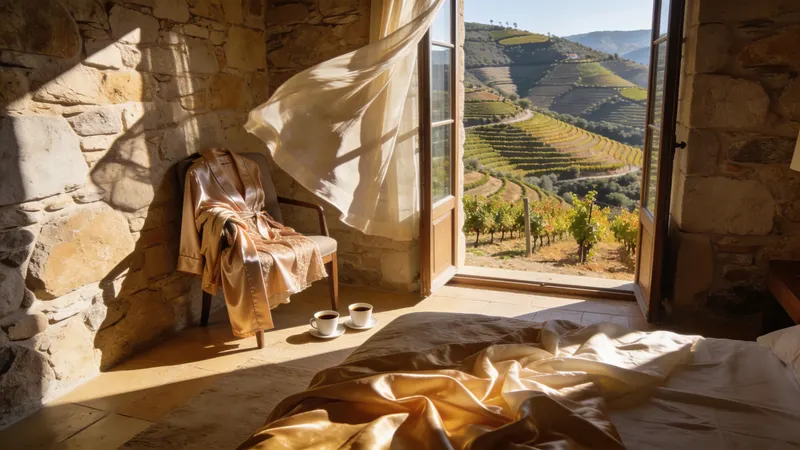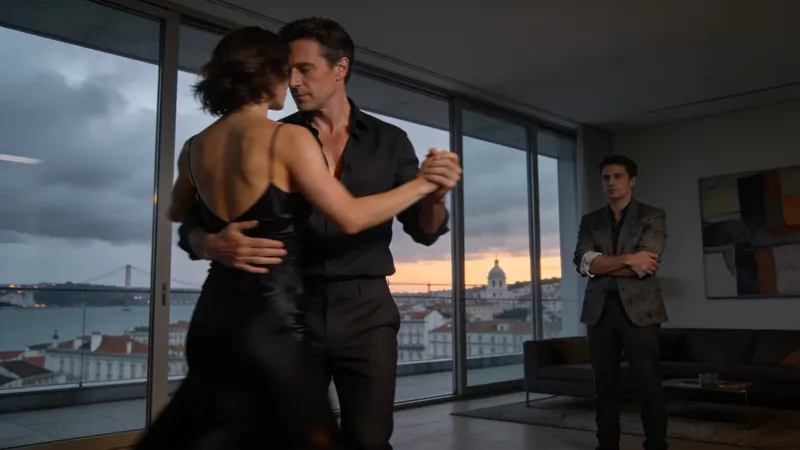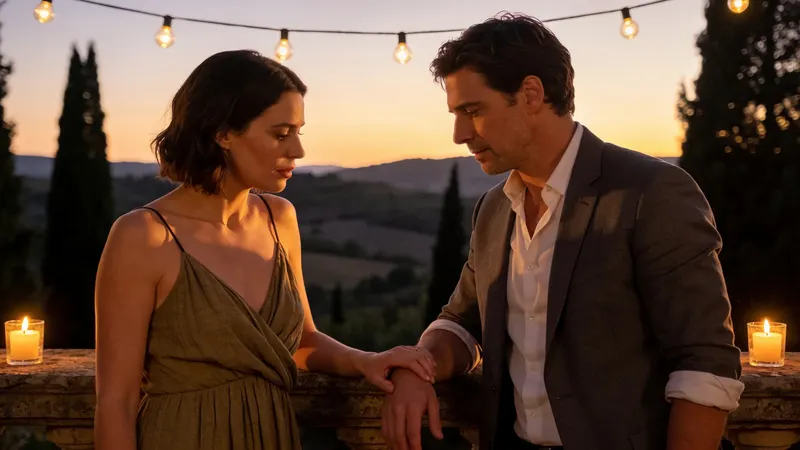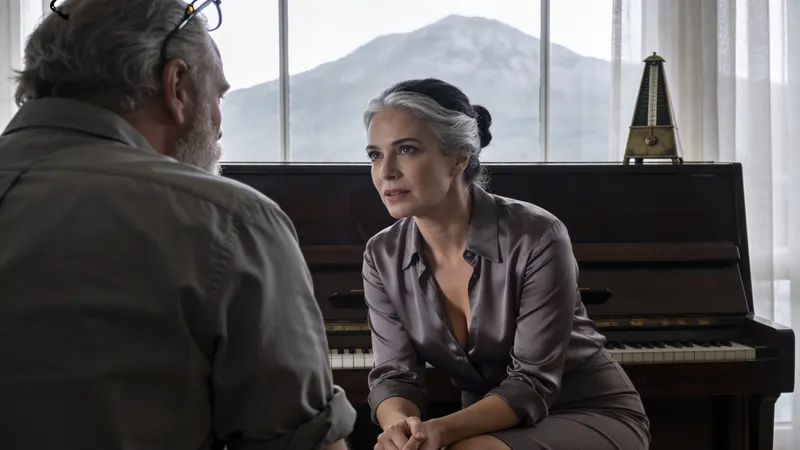
Who Sent Him to Casa Branca
Synopsis
A married couple’s quiet life in Lisbon ignites when Orion, 41, receives an anonymous invitation to Casa Branca, an exclusive swing club filled with art and candlelight. He’s stunned to discover it was orchestrated by his wife, Isadora, 39, a cultural curator who’s been reimagining their marriage behind the scenes. As they explore consensual non-monogamy and shifting power dynamics, their connection deepens through stolen glances, intimate touches, and shared secrets.
What to expect
- A slow unraveling of control and silence
- Luxurious, sensory-rich scenes in a hidden Lisbon club
- A marriage tested and transformed by desire
- Eroticism woven with emotional risk and revelation
- A twist where the betrayer becomes the seducer
Tropes: Forbidden romance, Power exchange, Second chance, Strangers
Content notes: consensual non-monogamy, power dynamics, emotional vulnerability
Story details
| Chapters | 3 |
|---|---|
| Reading time | 13 min |
| Spice level | 4/5 |
| Rating | – |
| Reads | 1 |
| Status | Complete |
| Published | |
| Updated |
Chapter 1: The Ivory Envelope
Orion, 41 years old, turned the ivory envelope in his hands, the wax seal cracked as if it had been waiting for him to arrive, not broken by his fingers but by the weight of a single, unspoken question: Who knew he’d respond to temptation? The paper was thick, hand-cut, the kind that whispered against the skin. He traced the raised emblem, a stylized C entwined with a serpent coiled around a lyre, and felt the old, dormant muscle in his chest twitch. He hadn’t been invited anywhere like this in years. Not since before Isadora, 39 years old, stopped laughing in her sleep.
He slipped it into the inner pocket of his wool coat, the same charcoal gray he wore every Thursday when he taught The Lusiads at the university. Control was a habit, not a virtue, and he wore it like the glasses perched on his nose, precise, unyielding. But the envelope pulsed against his ribs like a second heartbeat.
That night, Isadora came home late, her heels clicking on the tile like a metronome. She smelled of bergamot and something darker: incense, maybe, or burnt sugar. Her lips, painted the red of a bruise half-healed, curved when she saw him, but her eyes flickered, just once, to the empty armchair by the window. The one he never used.
“You’re still up,” she said, toeing off her shoes.
“I was grading,” he said. The lie was smooth, automatic. He didn’t tell her about the envelope, or how he’d spent two hours tracing the address printed in delicate script: Beco do Carro, 7, by invitation only. He’d mapped it. A narrow alley in Alfama, tucked between a shuttered bookstore and a laundry that hadn’t operated in decades.
She walked past him, close enough that her silk dress brushed his knee. “You look like you’re solving a riddle,” she murmured, pausing at the mirror above the vanity.
“I am,” he almost said. But he only adjusted his glasses and watched her reflection, the way her fingers trembled, just slightly, as she unclasped her necklace. A habit. Or a tell.
The next evening, he went.
He arrived at nine, the city already wrapped in the hush that came with old stones and sea mist. The door at Beco do Carro, 7 was unmarked, iron-bound, but opened at his touch. Inside, the air was warm, spiced with myrrh and something floral: ylang-ylang, perhaps, or gardenia. A woman in a silver mask handed him a black one in silence, her eyes amused, as if she knew exactly who he was pretending to be.
The space unfolded like a dream he wasn’t sure he’d authored. Velvet drapes in deep crimson framed alcoves where couples sat close, hands wandering with the slow precision of explorers. Candles flickered in glass vessels shaped like eyes. Art lined the walls: ink drawings of entwined bodies, a sculpture of two figures fused at the spine, a single video loop of a dancer falling and rising in endless repetition. Consent was murmured, nodded, written in the tilt of a head or the press of a palm.
Orion stayed in the shadows, his back to the wall, his breath shallow. He told himself he was observing. Studying. A scholar in a foreign text. But his pulse thudded in his throat, a rhythm he hadn’t felt since the first time Isadora had looked at him like he was something worth devouring.
Then he saw her.
Isadora stood in a circle of low light, barefoot on a rug of Persian weave, dressed in black silk that clung like a second skin. Her hair was down, a river of ink against her shoulders. She guided a couple through a ritual: her hands tracing the line of a woman’s jaw, then the man’s chest, her voice low, rhythmic, a lullaby edged with command.
“Breathe,” she said. “Let it rise. Let it burn. Then give it away.”
The man kissed the woman’s throat. She arched, moaning softly. Isadora stepped back, her hands clasped, her smile serene. She didn’t see Orion. Not yet. But she was radiant, alive in a way he hadn’t seen in years. Not since she’d left the theater, since the world had stopped applauding her.
He should have felt betrayal. Rage. Something clean and righteous.
Instead, heat coiled low in his belly.
He watched as she whispered to the couple, as they nodded and moved to a curtained alcove. Watched as she smoothed her hair, as she laughed, throaty, unguarded, when a server handed her a glass of amber liquid. Watched as she became, not his wife, but a force.
He slipped out before she could turn his way, before the mask could slip from his face. Outside, the air was cold, but his skin burned. He walked the cobbled streets with his hands clenched, his mind a storm. Not of anger. Not of shame.
Of want.
Back in their bedroom, he took off his coat, folded it with care. Isadora wasn’t home yet. He stood by her vanity, where a single lamp cast a pool of gold on the marble. He reached into his pocket, pulled out the ivory envelope, and placed it in the center of the tray: no note, no gesture, just the quiet weight of it.
Then he waited.
When she came in, just past midnight, she paused in the doorway, her eyes going straight to the envelope. She didn’t startle. Didn’t frown. She stepped inside, closed the door behind her, and walked to the mirror.
For a long moment, she said nothing. Then she picked up the envelope, turned it in her fingers the way he had. Her reflection caught the light, her lips parting just enough to reveal the smallest smile.
Isadora stood at the mirror, the ivory envelope in her hand, smiling as if she’d just won a game Orion didn’t know he’d entered.
Chapter 2: The Orchestrator
Orion stood in the antechamber of Casa Branca, the weight of his name still echoing from the hostess’s lips. Admitted under his real name. No mask this time, no borrowed anonymity. Just his wool coat dusted with the faint sea-salt mist of Lisbon’s evening, his glasses slightly fogged from the warmth within. He had expected resistance, a denial, some sign that entry was still forbidden. Instead, the woman (tall, dark-haired, eyes knowing) had only inclined her head and murmured, “She’s been expecting you.”
The words clung to him as he followed her down a corridor lined with oil portraits of androgynous figures, their faces blurred as if painted mid-turn. The air was thick with beeswax and something darker: jasmine, maybe, or the musk of skin held too close. Music pulsed beneath the floor, a slow, syncopated rhythm that matched the beat of his throat.
She led him to a balcony overlooking the main chamber. Velvet drapes, the color of dried blood, parted at her touch. Orion stepped forward, and the world narrowed.
Below, the room moved like a dream he’d once had and forgotten. Couples swayed in silence, limbs entwined beneath candlelight. A woman in a silver half-mask traced the spine of a man kneeling before her, her fingers deliberate, unhurried. Another pair stood bathed in blue light, mouths locked, hands buried in hair, the line between possession and surrender impossible to discern. The art on the walls wasn’t merely displayed; it was involved: a sculpture of intertwined hands reached toward a couple dancing; a projected film flickered across a woman’s bare back, shadows forming and dissolving.
And in the center, Isadora.
She wore black silk, the fabric clinging and releasing with each slow revolution of her body. Her partner, a man Orion didn’t recognize, broad-shouldered, barefoot, moved with her, not leading, not following, but orbiting. She had her eyes closed, her head tilted back, red lips parted. But then, as if sensing the shift in air, she opened them.
And looked straight at the balcony.
Her expression didn’t change. No surprise, no guilt. Only a flicker, something like triumph, like relief, before she turned back to her dance. But Orion felt it: the thread between them, snapped months ago, suddenly pulled taut.
He gripped the railing. His breath came shallow, controlled, as if he could hold himself together by discipline alone. But his pulse throbbed in his wrists, in the base of his skull. He had come to confront, to demand, to reclaim. Instead, he stood transfixed, watching his wife become something he’d never allowed himself to see.
Later, in a soundproofed room lined floor to ceiling with books and vintage records (Borges, Woolf, Cocteau, vinyl sleeves cracked with age), she found him. The door clicked shut behind her. No warning. No performance.
You were supposed to come earlier, she said. Her voice was low, unshaken. I sent that invitation months ago.
He turned. “You knew I’d find it.”
I wanted you to. I wanted you to come here, not sneak in like a thief in the dark.
“Then why not tell me? Why the secrecy? The lies?”
She stepped closer, just inside the ring of lamplight. Her heels were gone, her feet bare on the worn rug. Because you stopped looking at me. Because every time I spoke, you nodded like a professor marking an essay. Because you loved me like a footnote, Orion. I needed you to want me. Enough to break your own rules.
“That’s not love. That’s manipulation.”
“No. That’s survival.” She crossed her arms, not in defense, but in challenge. “I’ve been faithful to us. Just not in the way you understand.”
Silence stretched. The record player hummed faintly, a needle searching for a groove. Outside, music swelled, then faded.
Will you watch me? She asked, her voice softer now. Or will you join me?
He didn’t answer. His chest ached. He thought of the envelope on her vanity, of the way she’d smiled. Not with cruelty, but with hope. As if she’d been waiting years for this moment.
She stepped closer. “Tell me what you want.”
He looked at her, really looked. At the faint line between her brows, the pulse in her throat, the way her lower lip trembled when she lied. She wasn’t lying now.
“You,” he whispered. “Only you. But like this.”
The words hung between them, fragile and fierce. Consent, not assumed, but named. A pact.
They didn’t touch. But the space between them shimmered, charged with every unspoken thing: the nights she came home late, the way he’d turned to books instead of her, the slow erosion of trust that wasn’t betrayal, but neglect. And now, this: not an end, but an opening.
Isadora exhaled, long and slow. Then she turned and left the room without another word.
Orion followed, not because he was invited, but because he could no longer stay away.
Back in the main chamber, the music had slowed. A single spotlight fell on the center of the floor. Isadora stood there, her hand extended toward the man from earlier. He took it, and they began to move, a dance of give and take, of hands skimming waists, of breaths mingling in the space between lips that never quite met.
Orion stood at the edge of the dance floor, his hand half-raised, as Isadora turned toward him, waiting for his answer.
Chapter 3: The Invitation Rewritten
Orion stepped forward, his polished Oxford breaking the invisible line between observer and participant. The music, a low cello pulse beneath whispered vocals, seemed to swell as he crossed the threshold of the circle. Isadora’s partner, a man with silver at his temples and grace in his spine, met Orion’s eyes and bowed slightly, releasing her hand. He did not linger. He simply stepped back, a silent passing of the torch.
Isadora didn’t move. She waited, barefoot on the cool stone, her black silk dress catching the candlelight like water. Orion removed his jacket, folding it with ritual care over his forearm. He set it aside on a carved bench. No performance. Just precision. Stillness. The way he had always loved: measured, contained.
Then he reached for her.
Their fingers brushed first, accidental, electric. A shiver ran through her, subtle as a breath, but he saw it. Saw the way her lashes lowered, the way her breath caught just before she lifted her hand again, deliberate this time, and placed it in his.
His palm settled on her waist. Warmth bled through the thin silk. She was trembling. Not from fear. From want.
They began to move.
Not to the rhythm of the music, but to their own. Slow. Close. Her hip grazed his thigh. His thumb traced the dip of her spine. No words. Just the hush of breath, the soft drag of fabric, the scent of her: bergamot and salt, the faintest trace of wine on her skin.
He leaned in, his lips grazing the shell of her ear. “Tell me what you want.”
She turned her face toward his, her red mouth a breath from his jaw. “You,” she said. “All of you. Even the part you keep locked away.”
He stilled. That part, the one he buried beneath lectures on Camões and footnotes on syntax, the one that ached in silence, that believed he had to earn her by being still, by never asking, never breaking.
Now, here, with her hand on his chest, feeling the uneven beat beneath wool and bone, he exhaled.
“I want to give it to you,” he said. “But slowly.”
She nodded. “Then let me lead.”
They moved to a private chamber: no mirrors, no audience, just candlelight and a low bed draped in indigo linen. A record played softly: Amália, raw and aching, singing of love and loss in a voice like smoke.
Isadora turned to him. Her fingers found the first button of his shirt.
“May I?” she asked.
He swallowed. “Yes.”
Each button released was a surrender. The cool air touched his chest. Her fingertips followed, light, reverent. She pushed the shirt from his shoulders. He let it fall.
Then her hands went to the tie at her neck. The silk parted. The dress slipped from one shoulder, then the other. It pooled at her feet.
She stood before him in nothing but a slip of black lace and the scar he’d never seen: a pale, crescent-shaped ridge just above her left collarbone.
He reached for it without thinking. Traced it with his thumb.
“You never told me,” he said.
Her breath hitched. “You never asked.”
The words landed like a stone in still water. All the things unsaid. All the silences he had mistaken for peace.
He knelt, pressing his lips to the scar. A kiss not of pity, but of witness. Of claiming.
She cupped his face, her voice a whisper. “Look at me.”
He did.
Not as her husband. Not as the man who corrected grammar in bed. But as a man who had forgotten how to be seen, and who now, finally, wanted to.
They undressed each other with hands that trembled, not from inexperience, but from the weight of it: this return, this rediscovery. Every touch was a question. Every sigh, an answer.
When he entered her, it was slow. Her nails bit into his shoulders. Her breath came in short, broken gasps. He buried his face in her neck, murmuring her name like a prayer, like a plea.
They moved together, not for spectacle, not for performance, but for the quiet, devastating truth of it: this was them. Not the versions they played for the world, but the ones who had loved in silence, who had starved each other without knowing.
After, they lay tangled in the sheets, skin to skin, hearts still racing. The record ended. The room was quiet except for their breathing.
She turned her head on the pillow. “Do you regret it?”
“No,” he said. “But I want to do it again. On our terms.”
She smiled, tired and radiant. “Our terms?”
“Yes.” He rose, pulled on his trousers, and walked bare-chested to the door. He returned with the small ceramic dancer from the entryway, the blindfolded figure, poised mid-step.
“I want to host next time,” he said, placing it on the nightstand. “Here. In our home. For us. For whoever we choose.”
She stared at it. Then at him. A tear slipped free, tracing her temple into the pillow.
“You’re not afraid?” she asked.
“I am,” he said. “But I want it anyway.”
She laughed then, soft, throaty, alive. The sound he used to think was for the stage. Now he knew it was for him. Only him.
Later, in the hush before dawn, she slipped from the bed. He watched her dress in silence, the curve of her back, the way she tucked a loose curl behind her ear.
At the door, she paused. “I’ll leave something for you.”
He nodded.
She was gone.
Sunrise bled through the shutters. He dressed slowly, methodically, as always. But something was different. Lighter. As if the weight he’d carried for years, the belief that love was earned through silence, had finally cracked.
Back in their apartment in Chiado, the city waking below, he found it on his desk.
An ivory envelope.
Sealed with wax.
Addressed in his own handwriting.
Inside, a single line, in her looping script:
Come to me.
The end
Editorial collection: The Ajar Collection
Related stories