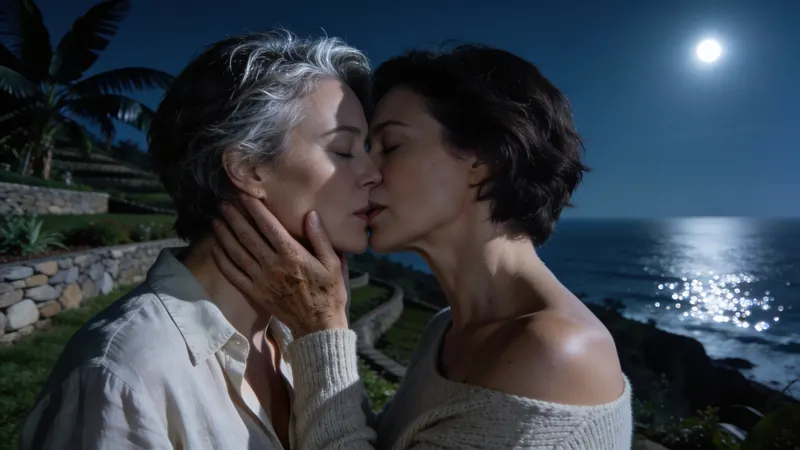
The Year Before the Soup
Synopsis
A slow-burn lesbian romance of friends to lovers, second chances, and explicit heat between two women nearing fifty. You came to Madeira to untangle a loveless marriage. Elise, the retired marine biologist next door, brought soup the day it ended. Her unsent letters prove she had been loving you quietly for a year.
What to expect
- A slow burn that begins with soup on a garden wall
- A rain-laced first kiss under the banana trees
- Unsent letters that reframe every kindness
- Explicit, tender intimacy between two women in their late forties
- A second chance at being truly seen.
Tropes: Friends to lovers, Second chance, Neighbors, Slow burn
Story details
| Chapters | 3 |
|---|---|
| Reading time | 17 min |
| Spice level | 5/5 |
| Rating | – |
| Reads | 1 |
| Status | Complete |
| Published | |
| Updated |
Chapter 1: The Pot on the Wall
You are still wearing the clothes you chose for the lawyer’s office, the divorce decree heavy in your bag, when a woman you have only ever waved to set a green pot of soup on your garden wall.
She does it unhurriedly, both hands, the way someone sets down something that matters. The enamel is green, deep as bottle glass, and steam lifts from under the lid into the cool wind that climbs the slope off the Atlantic. You stand at your gate with your keys still in your fist, forty-six years old as of last February, and for a moment you simply look.
“For endings that need salt,” the woman says.
You have waved at each other across the wall for weeks, nothing more. Up close she is taller than you imagined, hair gone salt-streaked and cut short, and her hands, where they rest on the warm stone, are calloused in a pattern you don’t recognize until later: rope work, the heels of the palms worn like a boat deck.
“Elise,” she says. “From up the hill. I heard the van today wasn’t yours arriving, it was the other thing.” She doesn’t say the word, and you are grateful and embarrassed at once, which is the condition you have lived in for a year.
You give her your own name, and she repeats it once, quietly, as if shelving it.
“I did marine research for twenty-six years,” she says. “Retired at forty-eight, a year ago. Now I grow fruit badly and soup well.” A dry tilt at the corner of her mouth. “Eat it hot. Return the pot whenever. I know where you live.”
It takes you a breath to catch the joke, and then a laugh comes out of you that you didn’t authorize. Her gaze stays on your face one beat past polite, and it lands on your skin the way sun lands through linen.
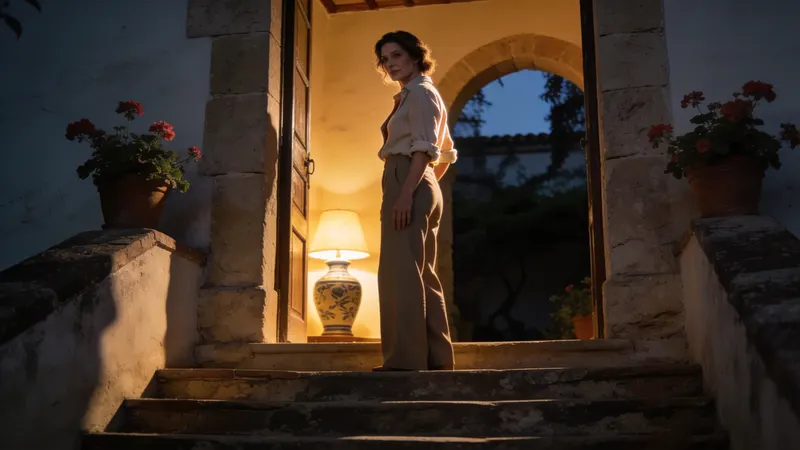
The wind pulls at your lawyer clothes. The pot is warm between your palms when you lift it off the stone. You thank her, she nods once, and she goes up the hill with her hands in her pockets, unhurried, the way she arrived.
Inside, you eat the soup standing at the counter. It is fish and fennel and something green, and it is so good that you sit down to finish it properly. You rinse the pot, dry it, and set it by the door to return tomorrow.
Tomorrow you move it to the shelf instead. You tell yourself the timing was wrong, that you’ll bake something first, that a pot returned empty is a message of some kind and you don’t know which kind. The pot sits on the shelf all week, green as an accusation, and the honest part of you, the small part, knows you are keeping it because it is the one warm thing anyone has handed you in a year.
The mangos appear first, three of them in a paper bag hung on your gate latch, then passion fruit, then a wedge of something dark and sweet you have to ask about over the wall.
“Black sapote,” Elise says, up on her terrace, pruningg shears in hand. “Tastes like pudding. Grows like a weed. My kind of plant.”
The wall talks accrete like coral, a few minutes at a time, always with the stone between you and the street behind you and neighbors’ windows above. You learn she checks the tide tables at dawn out of pure habit. “Twenty-six years of currents,” she says. “You don’t retire a reflex.” You learn the rails of her terraces are finished with sailor’s knots, each one different, and when you ask about them she says only that idle hands need somewhere to go.
You lend her a novel, forgetting until she has it in her hands that your penciled marginalia runs through every chapter, a professor’s habit twenty years deep that you never managed to drop. She finds the notes. Of course she finds them.
“You argue with the narrator on page ninety,” she says, returning it a week later. “You’re right, though. He’s a coward.”
“He’s careful,” you say.
“Same animal, different coat.”
One heavy evening in June, the air thick before rain that never comes, you sit on your terrace in the dark and cry. Not loudly. You learned quiet crying in a quiet marriage, twenty years of it, and the skill outlasts the need. The dark hides you, you are sure the dark hides you, and when you are done you wipe your face and go in and it is as if nothing happened, which is what you wanted.
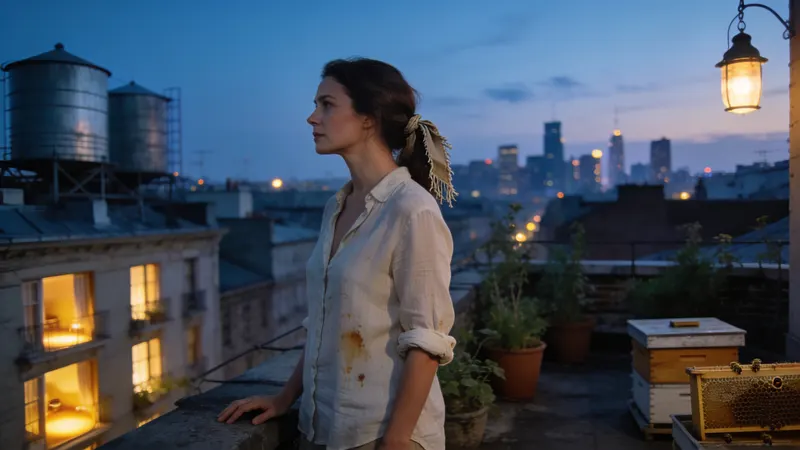
That same week, sleepless at your window, you find her study lamp burning late. One in the morning, two. Her silhouette crosses it now and then, seated, bent over something, still for long stretches in the posture of someone writing. A woman who answers questions in five words, who jokes dry as salt, sits up past midnight writing for hours.
The lamp goes dark at half past two on a Thursday, and you carry that light into bed with you like a draft under a door. You lie there adding up the hours she keeps, and by the time you sleep you have decided about the bottle of wine in the cupboard, the one you bought for the decree and never opened.
The wine is a decent Verdelho and it is your contribution. You bring it to the wall at dusk with two glasses, and Elise comes down from her terraces wiping her hands on her trousers, and for a while neither of you says anything worth recording, which is its own kind of ease.
Then she asks, straight, the way she asks everything: “What brought you to Madeira?”
“The far edge of the map,” you say. “Somewhere the marriage wasn’t.” You turn the glass in your fingers. “Twenty years. We were polite. We were so polite. Do you know what it costs, being polite for twenty years? You get so small you fit in a drawer.”
You have never said that out loud. The wine, maybe. The hour. The way she listens with her whole face turned to you, forearms on the warm stone, doing nothing with her hands.
“You came here to take up room,” she says. Not a question.
“I’m learning the shape of it.”
The light goes amber and then rose. Somewhere below, the harbor sounds carry up the slope, a horn, gulls. Elise pours the last of the bottle, splitting it fairly, a precise half each, and she does it without looking.
“The bananas on my lower terrace are flowering,” she says. “They only open at dusk. The scent lasts about an hour and then it’s gone for the year.” She says it to the garden, not to you. Then she does look at you, and her gaze holds that one extra beat, the one you have stopped pretending not to wait for. “Come down tomorrow evening. Before it closes.”
The stone is warm under your forearms, stored sun against the cooling air. Her hand settles over yours on the wall, calloused, unhurried, certain, and it stays.
“Yes,” you say, before you have decided anything at all.
Chapter 2: Rain in the Banana Trees
The whole next day you change your mind four times: once at breakfast over toast you don’t finish; once at noon, when a cloud bank sits down on the hills and you tell yourself the banana flower will forgive a postponement; and twice in the shower, which is where the mind does its least honest work.
At dusk you go down anyway.
The path to her lower terrace is stone steps worn hollow in the middle, a fig tree leaning over them, and then the garden opens: rows of passion fruit on wire, a papaya heavy with fruit and the banana trees at the far end, taller than you expected, their leaves broad as boat sails. Elise is already there, crouched at an irrigation line, and she straightens when she hears you, wiping her hands on her shorts.
“You came.”
“I said yes before I decided anything,” you say. “It seemed rude to reverse it now.”
“Good system. Deciding is overrated.” She lifts her chin toward the trees. “There. The big one, hanging like a purple fist.”
The flower is enormous, dark, its bracts lifting to show pale rows of blossoms, and the scent reaches you a breath later: sweet, heavy, faintly of honey, nothing like the fruit. It is the kind of smell that feels like a secret the evening tells only once.
“An hour,” she says. “Then it seals up, and that’s the year.”
“That’s a lot of pressure to put on a stranger’s evening.”
“You’re not a stranger.” She says it plainly, the way she says the tide tables, and then she is walking you through the rows, naming things, while her eyes keep dropping to your mouth and away again, a rhythm you pretend not to track.
You ask about the work, the one she retired from. It takes her three terraces to answer.
“Coral,” she says finally. “Reef surveys, twenty-six years. The last five I spent counting what was dying faster than we could write it down. You can’t grieve on a grant cycle.” She pulls a weed and drops it. “So I came home. Fruit doesn’t ask you to watch it fail. It asks for water and gives you sugar. Honest trade.”
“And you miss it.”
“I miss the water. I don’t miss the counting.” She checks the sky out of habit, the old dawn reflex transposed to dusk. “Rain. Ten minutes, maybe less.”
The first drops find you on the word, fine as spray off a wave, cool needles on your bare arms. Then the sky commits, and it comes down all at once the way island rain does: a roar on the banana leaves, the path turning to rivulets around your sandals.
“Under,” she says and pulls you beneath the biggest tree.
The leaves hold the rain off in a ragged canopy, water sheeting from the edges in curtains, and the space beneath is close and green and loud. You stand shoulder to shoulder, both breathing harder than a short run explains. Rain runs off her hair, down the salt streak at her temple, and her shirt has gone dark at the collar.
“Ten minutes,” you say.
“Or less.” But she isn’t looking at the sky anymore.
The almost lasts longer than the rain will. She lifts her hand slowly, slowly enough to refuse, and her thumb comes up to your cheek and lifts a drop of rain from the bone there. Then it stops. Her thumb stays against your skin, warm in all that cold water, the callus catching faintly, and the roar of the rain seems to come from very far away.
“I’m going to say this once,” she says, rough and quiet, her eyes on yours now, no beat past polite, all the beats. “Tell me to go back over my wall, and I’ll go, and we’ll do mangos at the gate like nothing happened. Or stay exactly where you are.”
You stay exactly where you are. You don’t trust your voice, so you answer with the smallest movement: your chin tipping up, your hand finding her wet sleeve and closing on it.
“That’s a yes,” she says, half a question left in it.
“That’s a yes.”
The kiss is slow for exactly three seconds. Her mouth is warm, rain-cool at the edges, careful in a way that asks again. Then twenty years of not being kissed, not like this, not by someone who waited a whole dusk for one flower, answer all at once.
Your hand is in her wet hair and hers is at the back of your neck, and the slowness is gone, spent. What replaces it is rain and breath and the small sound you make, which she answers with one of her own. It lasts a minute, or the hour the flower had left; you lose the instrument that measures it.
Lightning cracks white through the leaves and the thunder arrives on top of it, and you break apart laughing, both of you, startled as gulls.
“House,” she shouts over the rain. “Now.”
She takes your hand and you run up the steps, soaked through in the first four strides, slipping, laughing, her grip sure as a rope’s, and the flower’s hour closes behind you.
Her kitchen is lamplight and steam. She hands you a towel, then a folded stack of dry linen, a shirt of hers that smells of sun and faintly of the sea, soft from years of washing. You change in her bathroom with your heart still going like rain on leaves, and when you come out she has tea on the stove and a bottle of dark rum beside it, and she pours a finger into each mug without asking.
“Medicinal,” she says.
“I’ve read that in novels. It never is.”
“Then it’ll be a first for literature.” But her eyes go soft at the word, at you in her shirt, and she looks down at the mugs instead. “Dry shirt for you, hang on. That one’s mine, I want it back eventually.”
She goes down the hallway. The house settles around you, rain on the roof, the tick of the stove cooling. You stand with both hands around the warm mug, your wet hair dripping down your back, and you catch yourself smiling at nothing, at steam, at the stupidity of how good dry linen feels.
That is when you see the study door, ajar, and the lamp lit inside it.
You know that lamp. You have watched it burn from your terrace across a dozen late nights, a small yellow constant in her dark window, her silhouette bent under it for hours. You have wondered, over your own cold coffee, what a woman who speaks in single sentences writes for so long. The door stands open a hand’s width, and the rain covers the sound of your steps.
The study is small, its walls hung with charts and a barometer, a desk facing the window that faces your house. The lamp is green-shaded, old. On the desk, squared with a precision you recognize from how she pours wine, sits a stack of envelopes tied with butcher’s twine, thick as a ream, maybe more.
The top one is addressed in a hand you have never seen and somehow recognize at once: upright, economical, the letters pressed hard enough to emboss the paper.
To the woman in the blue-shuttered house.
There is no stamp and no street, because there was never any need for one. Your shutters are blue.
Your fingers are on the twine before the decision reaches them. Beneath the top envelope is another, and another, each one dated in the corner in the same pressed hand: June, then March, then January. You tilt the stack toward the lamplight and the dates walk backward through the whole year, months before the soup, weeks before the first mango at your gate, all the way back to an envelope dated the month your moving van came.
Before you ever spoke. Before she knew anything but your shutters.
The rain goes on roaring on the roof, and under it, so quiet you almost miss it, her footsteps stop behind you in the hallway. They do not come closer.
“Those,” Elise says from the doorway, “were never meant to be read.”
Chapter 3: The Last Letter
“Those,” Elise says from the doorway, “were never meant to be read.”
You don’t let go of the twine. You should, some careful part of you knows that, the part that has spent twenty years apologizing for taking up space. Instead you turn with the stack still in your hands, and she is standing there in dry linen, a shirt for you folded over her arm, and she does not come closer, and she does not look away.
“I came home to grow fruit and write nothing,” she says. Her voice is flat, deliberately flat, the way she talks about weather. “That was the plan. Ballast out, engine off. Then a moving van blocked my street for a day, and a woman carried boxes up those steps like she was carrying a library out of a fire.” Her mouth tilts, not quite a smile. “So I wrote to her. It was practice. Wanting, with no risk in it. I’d gotten out of the habit of wanting, and the last time I wanted someone I never said a word, and she married a man from Porto while I was counting fish.”
The rain hammers the roof. You wait.
“The soup was the only letter I ever delivered,” she says. “Everything since, the mangos, the wine, the wall. That was me trying to deliver another one and losing my nerve.”
“You watched me.” Your own voice comes out steadier than you expected. “For a year.”
“I can burn them.” She says it quickly, the first quick thing she’s said all night. “Tonight. I’ll put them in the stove and you never think about it again. The last thing I want is for you to feel watched in your own house.”
The stove stands cold in the corner. You look at the stack in your hands, a year of her silence, heavier than the pot of soup ever was, and you hear yourself ask the only question that matters.
“Is there one from the night I cried on my terrace?”
She goes very still. The lamplight does something to her face, strips the dry humor off it, and what is left underneath is bare.
“There is,” she says.
“Read it to me.”
“You cried because you thought the dark hid you,” she says, and her voice, her short declarative captain’s voice, shakes for the first time since you’ve known her. “That’s the letter. I stood at my window and I couldn’t cross the street, because crossing it would have meant admitting I’d been standing there. So I wrote instead.” She takes one breath. “Read it yourself. It costs me less if you read it.”
“It costs you more to say it out loud,” you answer. “That’s why I’m asking.”
She crosses the room then, finds the envelope by date without searching, and reads. Her voice breaks twice, and she does not stop. It is three paragraphs about a woman in the dark who thought she was invisible, written by a woman who could not stop seeing her, and by the end your cheeks are wet again, and hers are too.
Being seen came first, you understand, standing in her lamplight. Love followed it, and it could only ever have gone in that order.
You set the letters down on the desk, all of them, and the twine slides loose, and a few envelopes slip to the floor, and neither of you picks them up.
“I spent twenty years making myself small enough to be easy to keep,” you say. “I’m done with it. So I’m going to say this once, plainly, because plain is what I can afford now.” Your heart is going hard enough that she must hear it. “I want you. I have wanted you since the pot was still warm in my hands. I want tonight, and I want to stop pretending the wall is where this lives.”
She holds your gaze one beat past polite, the way she always has, and then two beats past that.
“I never guess at currents,” she says quietly. “Tell me the depth.”
“All of it,” you say. “Stop anchoring offshore.”
She laughs, rough and surprised, and then her calloused hand is at the side of your face, and the kiss is not slow this time, not at all. It is the kiss from the banana leaves continued an hour later and ten degrees warmer, her mouth sure and her breath shaking.
Your wet clothes land somewhere between the desk and the bed, and hers follow. There is a clumsy moment with the linen shirt, both of you laughing into each other’s necks, and the laugh undoes the last knot in you better than any vow could.
By lamplight she learns you the way she must once have learned coastlines, slowly, with her whole attention. Her rough palms map your shoulders, your belly, the inside of your thigh, while you tell her yes and there and don’t stop with a directness that would have terrified you a year ago.
When her fingers slide into you, you answer by pulling her closer. When you find her with your own hand, wet and hot and arching up into your palm, she says your silence back to you, all the things she never wrote down, murmured against your throat.
You take your time. Both of you do. Twice she slows at a threshold and waits, and twice you pull her through it, and when you finally shake apart under her mouth it is with her name in yours, and when she follows, your fingers deep and her hand fisted in your hair, she says, “there, stay there, exactly there,” and you do.
Afterward the lamp is still burning and the rain has thinned to nothing. Her handwriting is scattered across the floor, a year of it, and the heat of her palm is still printed on your hip. You lie against her shoulder and trace the rope calluses with your thumb, and the fear you carried up that hillside, that being truly seen ends in rejection, lies somewhere on the floor with the envelopes, finished.
“I should have knocked on your door a year ago,” she murmurs.
“You did,” you say. “You brought soup.”
Three mornings later you climb the steps with the green enamel pot in both hands, washed, dried, and heavier than soup.
She is on her terrace in the sun, pruning the passion fruit, and she watches you come the whole way up, which she never used to let herself do. You set the pot on the warm stone wall where she first set it for you, and inside it, where the soup used to steam, sits one envelope.
She wipes her hands on her trousers and takes it out. Your own handwriting on the front, penciled first and then inked over, a professor’s habit: To the woman who grows things.
She reads the first line. Then she stops, and looks up at you over the wall, and her eyes are shining in the morning light, and you do not tell her the rest. The rest is hers for the evening, for the lamplight, for the hours she likes to spend with words.
“Well,” she says, and the dry salt is back in her voice, steady again now that it doesn’t need to hide anything. “There’s a tide on Saturday. And an old boat in the marina that misses the water.”
The wall is still between you, warm from the sun. It doesn’t separate anything anymore. It’s just where you meet.
The end
Editorial collection: The Mirror Collection
Related stories