I Want to Be Caught
Synopsis
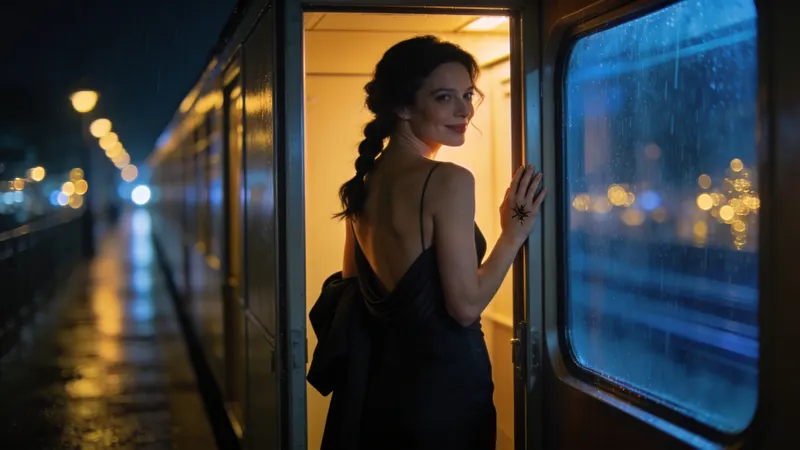
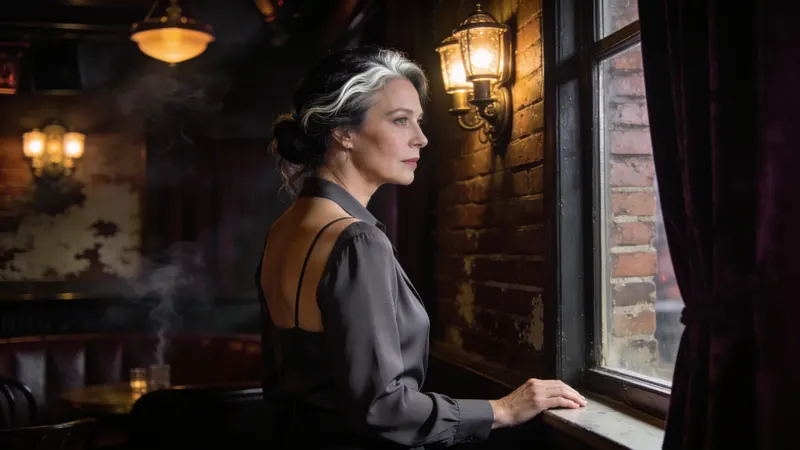
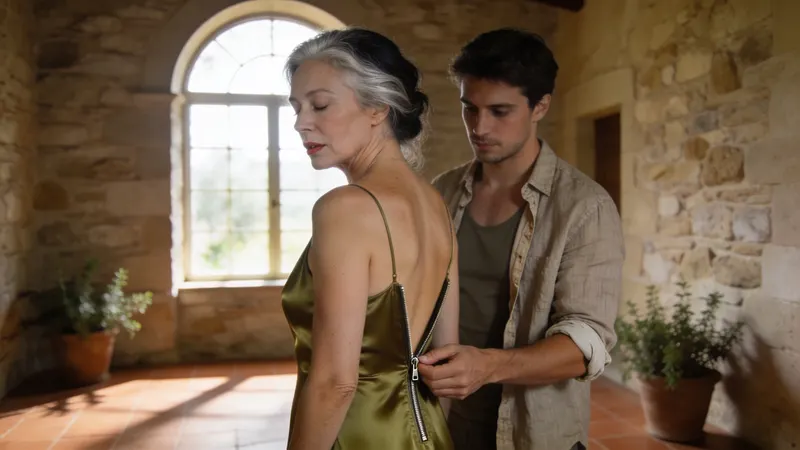
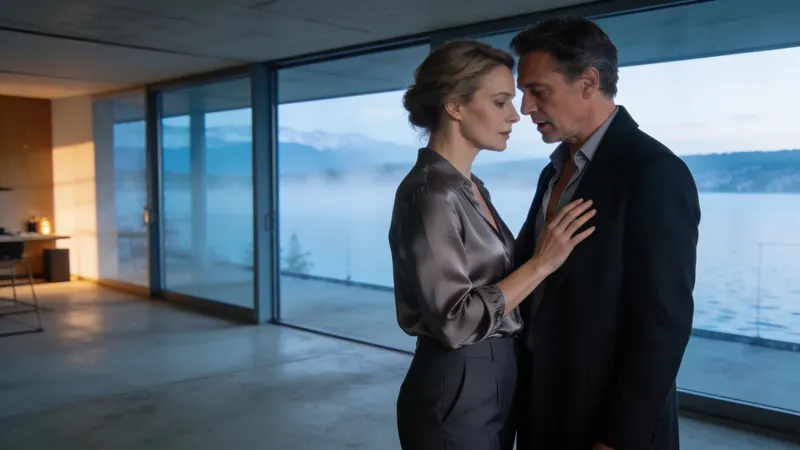
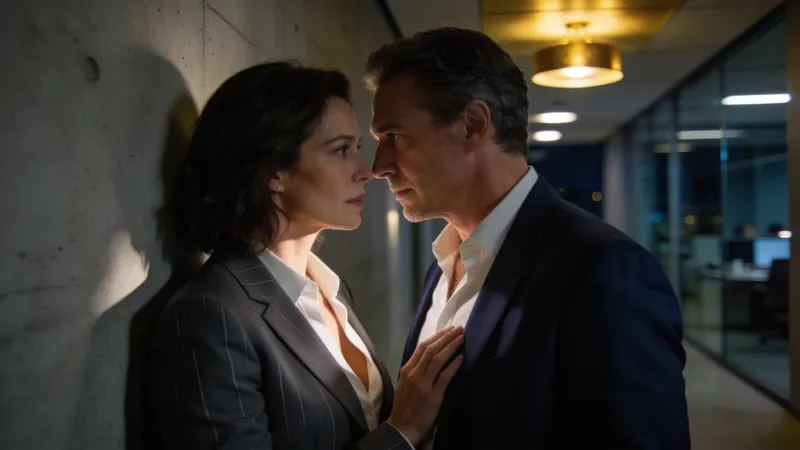
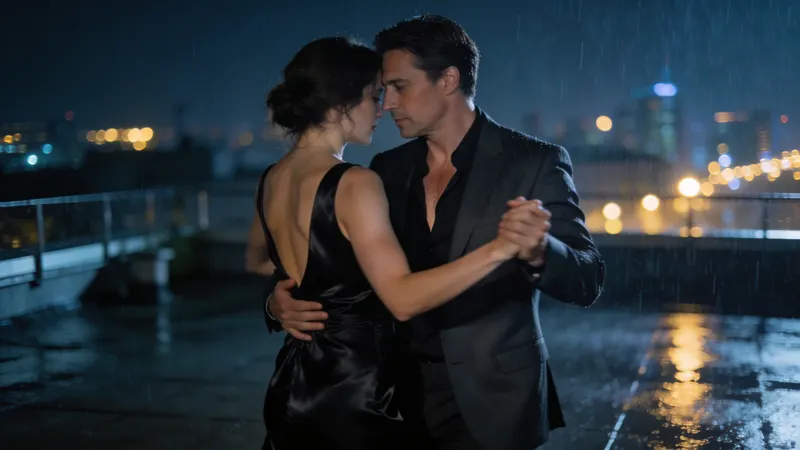
Nadia, 41, a reserved university archivist, begins an anonymous digital affair that awakens long-buried desire. When she realizes her mysterious lover is Teo, her husband’s 32-year-old junior researcher, the lines between betrayal and truth blur. After he quotes her private words back to her, the game changes. Torn between duty and passion, she must decide: continue hiding or embrace a love that sees her fully. Consensual, intense, emotionally charged.
What to expect
- A quiet woman reclaiming her desire after years of emotional distance
- An anonymous online connection that becomes dangerously real
- A twist that redefines every intimate message they’ve shared
- Consensual, explicit scenes where vulnerability meets fierce passion
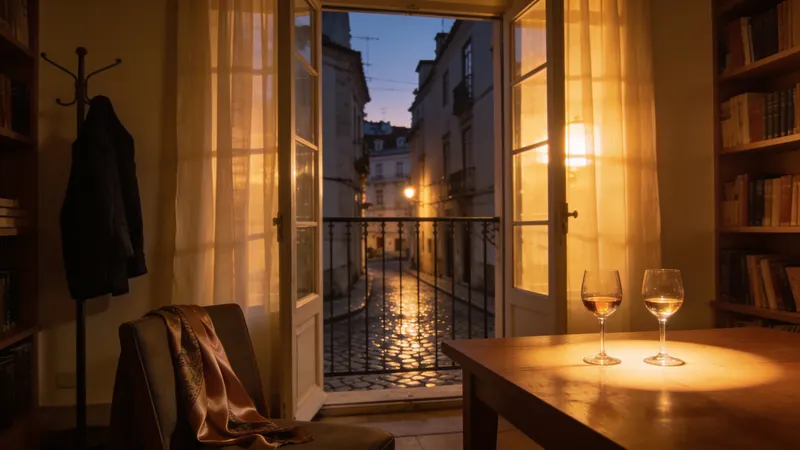
- Lisbon’s sun-drenched streets and hushed archives as a backdrop to longing
Tropes: Workplace romance, Age gap between adults, Sexual awakening, One-night stand
Story details
| Chapters | 3 |
|---|---|
| Reading time | 14 min |
| Spice level | 4/5 |
| Rating | – |
| Reads | 0 |
| Status | Complete |
| Published | |
| Updated |
Chapter 1: The First Message
Nadia, 41 years old, typed the words she would never say aloud: I want to be caught.
The glow of the secondary screen cast a pale halo over her hands, steady despite the tremor in her chest. Her wedding ring caught the light, a thin band of platinum, cool against the warm wood of the desk. Around her, the archive was silent, sealed in the hush of late evening. Dust motes floated above stacks of unprocessed manuscripts, and the scent of old paper and lemon oil clung to the air. She exhaled, slow and measured, as if someone might hear.
The reply flashed within seconds.
Then stop hiding.
She smiled. Not the polite, closed-lip curve she offered colleagues, but something real, small, secret, dangerous. Her fingers hovered over the keyboard. She typed, deleted, typed again. I don’t know how to be seen without being judged.
Who’s judging?
Myself.
A pause. Then: Then I’ll be the one who sees you. Just you. Not the archivist. Not the wife. The woman who writes in the dark.
Her breath caught. No one knew she wrote. Not even her husband. Not the words that poured out in the quiet hours, ink bleeding into lined pages, confessions of heat and hunger she’d buried beneath routine and duty.
She glanced at the fountain pen beside her notepad, her ritual, her rebellion. Black ink, fine nib, the weight of it familiar in her hand. She hadn’t used it tonight. Not yet. But she wanted to. Wanted to write something reckless, something true.
Tell me, he wrote, what you’d do if I were there right now.
She looked up. The archive was empty. The single overhead light flickered once, then steadied. She could hear the distant hum of the river beyond the stone walls, the occasional clatter of a tram on the cobbled street outside.
I’d let you touch me, she typed. Not because I’m weak. But because I want to feel real.
Where?
She hesitated. Not from shame, but from the sheer weight of the answer.
My neck, she wrote. Where no one else has in years.
And after?
I’d want your hand lower. On my waist. Then lower still.
Would you stop me?
No.
Good.
She closed her eyes. The screen dimmed, but the words glowed behind her lids. You’re braver than you think, he’d written earlier. She wasn’t sure she believed it. But she believed in this, in the quiet, in the risk, in the way her pulse thudded when the chat pinged again.
Over the next days, they circled each other in code and confession. He told her about a hidden garden off Rua das Portas de Santo Antão, where jasmine climbed the walls and no one went after dusk. She described the exact shade of blue in the tiles at the riverside café, the one near the library, the way the light hit them at four in the afternoon. Small things. But intimate.
And then, one morning, she saw him.
Teo, 32 years old.
He stood at the end of her aisle, flipping through a folder of microfiche records, sunlight catching the gold in his curls. He wore a linen shirt, sleeves rolled to the elbows, and a watch she recognized, her husband’s favorite brand. She froze, fingers tightening around her pen.
He looked up. Smiled. Not the smile of a stranger, but of someone who knew her.
“Good morning, Dr. Vale,” he said, voice warm, unhurried.
“Teo,” she replied, careful. “You’re here early.”
“Research waits for no one.” He stepped closer. Close enough that she caught the scent of salt and bergamot on his skin. “Though some things are worth delaying for.”
Her breath stilled. Was that a double meaning? Or was she imagining it, desperate to find him in the real?
He lingered, asking about a misplaced index, his eyes never quite meeting hers. But she felt the weight of them all the same.
Later, at the café, she sat with her notebook, pretending to sort citations. The blue tile behind her table was chipped near the corner, a flaw she’d noticed weeks ago, one she’d meant to report but hadn’t. It fascinated her, that imperfection. How something could be both broken and beautiful.
She stirred her tea, watching the spoon catch the light.
Then she heard the scrape of a chair.
Teo sat at the next table, a book open in front of him, a coffee untouched. He didn’t look at her. Didn’t speak.
But when he left, he dropped a napkin.
She waited until he was out of sight before picking it up. Scrawled in ink, her ink, she realized, from the pen she’d left on her desk, was a string of characters. An encrypted login.
That night, she opened the chat.
Was that you at the café? she typed.
Was it a coincidence? he replied.
Nothing feels like coincidence anymore.
Then let’s stop pretending.
Her fingers trembled.
Tell me what you wanted when you saw me, he wrote.
I wanted to know if your voice sounded like your words.
And now?
Now I want more.
A pause. Then: What would you do if I touched you right now?
She stared at the screen. The room was dark. Only the glow of the monitor lit her face.
I’d let you, she typed.
And if I kissed you?
I’d open my mouth for you.
Where?
Here. She placed a hand on her thigh. And here. Her fingers drifted higher. And here. She touched her lower lip.
The next message came slowly, deliberate.
Tell me where you’d want my hand first.
Nadia’s fingertip traced her lower lip as she read his message.
Chapter 2: The Quotation
Nadia’s fingertip traced her lower lip as she read his message, the screen’s glow catching the silver band on her left hand. She didn’t answer right away. Instead, she closed her eyes and imagined a touch that wasn’t hers—fingers rougher, bolder, moving up her thigh with purpose, not hesitation. Her breath came shallow. She typed, On my neck. Where my pulse is.
The reply was instant. And when I press my thumb there, feel your heart against my skin—what then?
She exhaled, a small sound lost in the quiet of her study. I’d tilt my head. Let you in.
Like you did in the journal entry from June fourteenth, he wrote.
Her body stilled.
That date wasn’t in the chat logs. It wasn’t part of their encrypted confessions. June 14th was three years ago. Rain tapping the archive windows. Her husband away in Coimbra. She’d written in longhand, ink bleeding slightly through the page: I want someone to press their thumb to my throat and know I’m alive.
She hadn’t shared that with anyone.
Not even him.
Her chest tightened. She stood, pacing the room barefoot, the silk of her robe whispering against her legs. She opened a locked drawer, pulled out the journal—bound in deep green leather, its spine cracked from use. Flipped to the page.
There it was.
And then she remembered: one afternoon, a year ago, her husband had taken it from her desk. Smiling, reverent. This is extraordinary, he’d said. Real depth. I want Teo to see what real insight looks like.
She’d protested, but mildly. It felt like praise, not exposure. And Teo was his protégé, brilliant, discreet. A colleague. A ghost in the archive stacks.
She hadn’t thought.
She’d trusted.
Now, in the dark, her stomach turned. Not with shame. With fury.
She typed, fingers sharp on the keys. How long have you known?
A pause. Longer than usual.
Since the beginning.
You read my words. Then pretended to discover me.
No. One word. Then: I discovered you when you wrote back to me as yourself. Not as his wife. Not as the archivist. As the woman who says she wants to be caught… but only by someone who sees her first.
She didn’t reply.
You think I used them, he wrote. But I waited. I read what you gave him—your dreams, your hunger, the way you describe silence like it’s a lover—and I didn’t write. I didn’t speak. I let you come to me. Your voice in the chat was yours. Not his. Not mine. Yours.
She sat down, the journal heavy in her lap.
The next morning, she saw him in the café. Same table. Same chipped blue tile behind him, catching the sun like a secret. He stirred his coffee slowly, eyes on the river. She approached, not because it was chance, but because she chose to.
You knew, she said, voice low.
He looked up. Not startled. Not guilty. Just present.
Yes.
Why didn’t you tell me?
Because I was afraid you’d stop writing. And I needed to hear you. Not the woman who curates silence. The one who breaks it.
You had no right.
No, he said. I didn’t. But I also didn’t touch you. Not until you asked. Not until you said more.
She sat. Ordered tea. Didn’t stir it.
I feel exposed, she said.
Then let me look, he said. Not as someone who read your words. But as someone who wants to earn them.
Their eyes locked. The city hummed around them—trams, voices, the soft cry of gulls—but in that moment, the world narrowed to the space between their breaths.
That night, she didn’t open the chat. She waited in the archive after hours, lights dimmed, the scent of old paper and cedar hanging in the air. She heard his footsteps before she saw him.
You came, he said.
I came to confront you, she said. Not to…
To what?
To want you.
But you do.
She didn’t deny it.
Then he stepped closer. Rain had started, tapping the high windows. The alley behind the archive was slick with it, shadows deepening in the corners.
Take me there, she said. Not a plea. A command.
He led her through the back exit, the cold night air sharp on her skin. Against the brick wall, sheltered by an overhang, he turned to her.
Is this real enough for you? he asked.
She looked up, rain catching in her lashes.
Yes, she whispered. Don’t stop.
He cupped her face, slow, giving her time to pull away. She didn’t. He leaned in, and when his lips met hers, it wasn’t tentative. It was certain. A claiming, not a request.
She moaned into his mouth, fingers gripping his coat. He deepened the kiss, tongue sliding against hers, and she opened for him, eager, starved. His hand slid down her neck, over her collarbone, then lower, stopping just above her breast.
Tell me you want this, he murmured against her lips.
I want this, she breathed.
More?
More.
His hand moved, palm pressing over her heart, then curving around her breast, thumb brushing her nipple through the thin fabric. She arched into him, a shiver running through her.
Like this? he asked.
Yes.
And this? His other hand slipped beneath her coat, tracing her hip, pulling her against him. She felt his hardness, insistent, alive.
Yes. Don’t stop.
They kissed again, frantic now, hands exploring, learning. His fingers dipped under her blouse, warm against her stomach, climbing higher. She gasped when he brushed her bare skin, when his thumb circled her nipple through her lace bra.
Tell me what you need, he said.
You. Your hands. Your mouth.
Then have them.
He kissed her neck, teeth grazing her pulse point, and she cried out, fingers tangling in his curls. He sucked gently, then harder, marking her, and something inside her unraveled—years of restraint, of silence, of believing desire was a wound, not a gift.
She reached for his belt, but he caught her wrist gently.
Not yet, he said. Tonight is about you being seen. Not hidden.
She nodded, breathless.
He kissed her again, slow this time, deep, until her legs trembled. When they finally pulled apart, her lips were swollen, her body humming.
I’ve never felt like this, she admitted.
Like what?
Like I exist.
He brushed a rain-damp strand of hair from her face.
You do, Nadia. You always have. I just wanted you to know it too.
She walked back through the archive alone, her coat clutched tight, lips still warm from his mouth. In the bathroom, she turned on the faucet, splashed cold water on her wrists, on her neck. Looked at herself in the mirror.
Her pupils were wide. Her skin flushed. Her mouth—still parted, still hungry—looked like someone else’s.
She turned off the water.
Then, slowly, she reached for her wedding ring. Rolled it between her fingers.
Not off. Not yet.
But for the first time, she wondered if love could hold both truth and silence. And if, perhaps, they weren’t opposites at all—but the breath before the word, the pause before the kiss.
Chapter 3: The Return
Nadia didn’t go to the archive the next day. Or the day after. She told herself it was illness—migraine, fatigue, anything that smelled of truth without requiring one. But the silence in her apartment was too loud, each tick of the clock a reminder of what she’d done, what she’d almost undone. She kept her ring on, twisting it absently while staring at the blank screen of her laptop, where the encrypted chat window blinked, untouched. Teo hadn’t messaged. No bold provocations, no veiled metaphors, no Good morning, shadow. Nothing.
Her husband noticed. Of course he did. That evening, over roasted sardines and a bottle of vinho verde, he leaned back in his chair and said, “Teo gave an excellent presentation today. Sharp mind. I’ve always said he’ll go far.”
Nadia sliced a sardine with precise, unnecessary force. “That’s good.”
“He mentioned you’ve been absent. Said he hoped you were well.”
She looked up. “He said that?”
“Mm. Seems to think highly of you.” He smiled, unaware. “Funny. I always thought you two didn’t speak much.”
We speak in every way that matters, she thought. And in ways you gave him permission to.
That night, she dreamt of ink. Her fountain pen bleeding across the page, words rising like smoke: I want to be caught. I want to be known. I want to be wanted. She woke with her hand between her thighs, breath ragged, the sheets damp. Shame curled in her stomach, but beneath it—something hotter, fiercer. A pulse of yes.
She returned to the archive on Thursday. The air was cool, the scent of old paper and lemon oil familiar, but the space felt different—charged, like the moment before thunder. She avoided the reading room, lingered in the back, where the restoration tables stood in pools of lamplight. And there, centered on her usual workspace, lay her fountain pen.
Not just placed. Offered.
The brass cap gleamed. The weight of it in her palm was a homecoming. Beneath it, a slip of paper:
Write me the ending you want.
No signature. No flourish. Just those words, in his handwriting—clean, urgent, alive.
She sat. Uncapped the pen. Opened her private journal—real paper, real risk—and began to write.
Not in code. Not in metaphor. No Lisbon streets, no archival metaphors for desire. She wrote of heat, of trembling, of a mouth on her neck, of a man who saw her not as wife, not as keeper of silence, but as a woman who burned. She wrote of choosing him. Not as escape. Not as rebellion. But as return. To herself.
She wrote until her hand ached. Until the words stopped being confession and became vow.
She left the journal open on her desk. Walked out. Did not look back.
They met at the café the next afternoon. Rain misted the Tagus, the light soft as breath. He was already there, sitting at their usual table, his curls damp, his fingers tracing the chipped blue tile behind the seat—the one she’d noticed weeks ago, the one she’d touched each time she sat, as if to anchor herself.
“You notice everything,” he said when she arrived.
“You left me the pen.”
“I asked for an ending.”
She sat. “I gave you one.”
He didn’t ask to see it. Didn’t need to. “And your husband?”
“I haven’t told him.”
A pause. Not judgment. Just presence.
“Do you want to?”
“I don’t know.” She looked at her hands. “I thought wanting you was betrayal. But it doesn’t feel like that. It feels like… truth.”
“Wanting me isn’t selfish, Nadia. It’s honest.”
She met his eyes. “I’m afraid of what honesty costs.”
“Then let me carry some of it.”
She reached into her bag. Handed him the pen.
He didn’t write in her journal. Not yet. Instead, he turned the page to the margin. And in her hand, with her ink, he wrote one sentence:
I want to be found.
Her breath caught.
He handed it back. “Now you.”
She wrote beneath it, slow, deliberate: Then let me find you.
They left the café without speaking. Walked through the rain, shoulders brushing, not rushing. The archive was empty when they arrived. Closed for inventory. The heavy door clicked shut behind them, sealing them in amber light and silence.
No masks. No pretense. No encrypted words to hide behind.
He took her coat. She unbuttoned his shirt. One button. Then another. His hands trembled—just once—as he reached for the clasp of her blouse.
“Here?” he whispered.
“Yes.”
“Like this?”
“Yes.”
He peeled the fabric back, kissed her collarbone, then lower, over the swell of her breast, his breath warm through the lace. She gasped, fingers tightening in his hair.
“Keep going?” he asked.
“Don’t stop.”
He unhooked her bra. Let it fall. His mouth closed over her nipple, gentle at first, then insistent, and she arched into him, a moan spilling free. Her hands moved to his belt, this time without hesitation.
“Wait,” he murmured. “Let me see you.”
He stepped back. Undressed slowly—shirt, pants, underwear—each piece a revelation. She did the same, folding her clothes with quiet care, her movements deliberate, unashamed. When she stood bare before him, she did not look away.
He traced the curve of her hip, the dip of her waist, the softness of her belly. “You’re so real,” he whispered.
“So are you.”
He kissed her again, deep and slow, until her knees weakened. Then he lifted her, carried her to the long table used for document restoration, padded with felt and memory. Laid her down as if she were a rare manuscript, something to be preserved, not consumed.
He entered her slowly, watching her face, waiting.
“Tell me,” he said.
“Yes,” she breathed. “Yes, like that.”
He moved with her, steady, deep, each thrust a question answered. She wrapped her legs around him, pulled him closer, met him stroke for stroke. The air filled with sound: skin on skin, breath, whispered yes, yes, yes, until the world narrowed to this: his body, her body, the unbearable rightness of being seen and chosen.
She came first, silently, her back arching, her fingers digging into his shoulders. He followed, a low groan against her neck, his body shuddering.
After, they lay tangled on the table, her head on his chest, listening to his heartbeat slow. The archive was silent. The city beyond the windows hummed with life they no longer needed.
She turned her hand, looked at her ring. Then, slowly, she slipped it off. Placed it on the edge of the table. Not discarded. Not forgotten. Just… set aside.
She rested her bare hand on his chest, over his heart.
Outside, the café’s chipped blue tile caught the last light of day, glowing in the rain-streaked window.
And in its reflection, two bodies. One choice. A beginning.
The end
Editorial collection: The Ajar Collection
Related stories