Letting the Healer See the Hidden Sculpture
Synopsis
A 47-year-old ceramic artist living in isolation on the Irish coast invites a 39-year-old therapeutic masseuse to stay in her studio. Bound by silence and shaped by touch, their slow-burn connection deepens as buried emotions surface. When a hidden sculpture reveals long-held truths, they confront their fears and find love in the quiet space between healing and desire. Consensual emotional and physical intimacy unfolds with care.
What to expect
- Slow-burn intimacy between two emotionally guarded adults
- Sensual, consensual touch as emotional language
- A quiet, atmospheric setting that mirrors inner transformation
- A turning point where art reveals what words cannot
- An emotional and erotic climax that redefines vulnerability as strength
Tropes: Massage, Friends to lovers, Vacation fling, Power exchange
Story details
| Chapters | 3 |
|---|---|
| Reading time | 15 min |
| Spice level | 5/5 |
| Rating | – |
| Reads | 0 |
| Status | Complete |
| Published | |
| Updated |
Chapter 1: The First Touch
Anya, 47 years old, watched the man from her doorway, his suitcase sinking into the mud, and wondered if silence would be enough to send him away.
He stood with one hand on the roof of a rented car, the other pulling a scarf from his throat. Rhys, 39 years old, looked tired in the kind of way that had no edge, only erosion. She had offered him the spare corner of her studio because the village needed a healer and she had needed the rent money, and because she had forgotten how to say no when someone sounded like he had nothing left to take.
“Come in,” she said. “Before the door lets the cold through.”
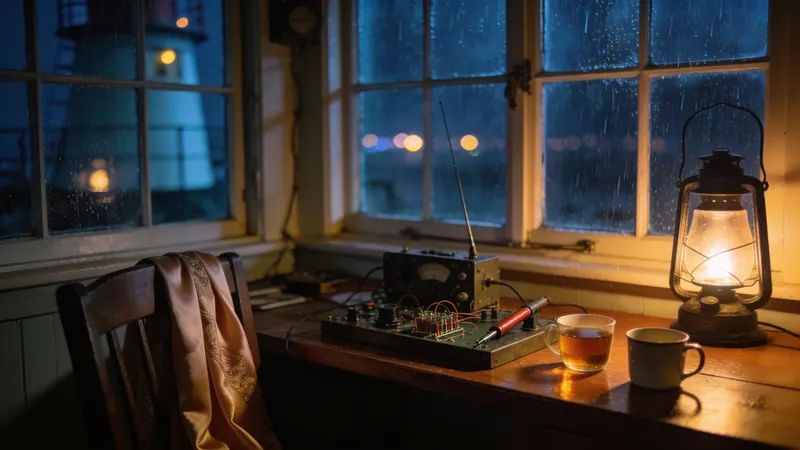
He stepped inside and set the suitcase down with care, as if it contained something alive. The studio smelled of wet clay, tea, and the salt that crept through the window even when the sea was far out and unseen. Half-finished wave sculpture sat on a shelf, blue-gray and curling like a storm caught in the body. She drank from the chipped blue mug and set it beside the kiln.
“You have a room,” she said.
“I have a mat,” he corrected. “That is enough.”
She showed him the corner behind the kiln, screened by a heavy linen curtain. No bed, only a narrow mattress, a shelf, a lamp. He bowed his head as if accepting a chapel.
“Thank you,” he said. “I will not be in your way.”
That was the wrong promise, but she let it pass.
The first days were quiet enough to become a test. Anya threw clay, trimmed rims, watched the light move along the shelf. Rhys swept the floor, washed his own dishes, sat outside on a bench with a notebook he never opened. He asked no questions. He did not try to fill the gaps she left.
On the third morning, she burned her thumb on the kiln shelf and hissed. He appeared at once, not touching her, only holding a towel and a small jar of oil.
“May I?” he asked.
She hesitated. Then she gave him her hand.
His fingers were warm, broad at the tips, careful at the joints. He spread oil over the red mark and worked it in with slow circles. She felt the tremor in his own hands, not fear, only effort. When he finished, she pulled back too fast.
“Thank you,” she said.
“Thank you,” he said.
That afternoon, he brought a table, padded and clean, into the main room. He set a bottle of oil on the shelf. He did not ask her to use it. He simply said, “If you want, I can offer a session. Not therapy. Just touch.”
Anya looked at the table. It looked too honest, too open. “I am not broken,” she said.
“No,” he said. “You are carrying.”
She should have said no. Instead she sat. He waited. The silence had teeth, but she answered it.
“Yes.”
He asked her to lie face down. She did. Her shirt lifted at the hem, her breath caught when his hands touched the bare skin of her back. The first stroke was a question. He pressed at her shoulders, then moved down along the ridge of her spine, past the waist, stopping before the curve that made her thighs draw together.
“You have permission for deeper?” he asked.
“Yes.”
He worked with reverence. She heard him breathe as he listened through her body. The heat gathered low in her belly, embarrassing and bright. Her nipples tightened against the sheet. She had forgotten touch could make need so loud.
His thumb traced the scar at her shoulder, the old fall that had left a crooked line under the skin. She thought he would pass over it. He did not.
“Here?” he murmured.
She turned her head. “Yes.”
His fingers moved around it, slow, as if reading a language. Her breath caught again.
“You carry your history here,” he said.
The room went still. She did not answer. The words went under her skin and stayed.
When he finished, she sat up too quickly and the sheet fell. She saw the oil shine on her collarbone, the flush along her chest, the damp heat between her thighs. He looked away, not from shame, only care.
“Are you all right?” he asked.
Anya found her voice. “Yes.”
That night, she left a fresh towel outside his curtain. She heard him shift, heard the soft sound of him reading her gesture. In the morning, the towel was gone.
At midnight, she could not sleep. The wind was pulling at the roof, and the kiln ticked as it cooled. She walked into the studio, needing to work, needing not to think. Behind the curtain, Rhys slept on his side, one hand open, the other curled near his mouth. His fingers twitched, as if they still sought a body to hold.
She should have gone to bed. Instead she went to the wheel. A mound of clay waited under a wet cloth. She centered it, let it rise, pressed her palms into its turning. It spun under her hands, soft and resisting. She worked until her skin cooled. Then she stopped.
For the first time in years, she paused not because the clay had failed her, but because she was listening.
Across the room, behind the curtain, Rhys breathed. The sound was small, alive, and it held the whole silence of her house.
Chapter 2: The Shape Beneath
The breathing behind the curtain steadied, and Anya let her hands fall from the wheel. The clay remained soft in her palms, still warm from her body. Across the room, Rhys slept as if he had been waiting for her to stop moving.
She did not go back to bed. She wiped her hands, checked the kiln, and listened to the sea throwing itself against the cliffs below the studio. She had turned forty-seven that spring. She had made a life out of not needing anyone. Rhys, thirty-nine, had come with a bag of oils and the careful humility of a man afraid of taking up space.
In the morning, she found him already up, making tea on the little stove in the corner. The chipped blue mug sat on the shelf behind him, waiting for no one.
“May I touch your shoulders?” he asked.
“Yes.”
The sessions began quietly. At first, he came only when she was working late and her neck had become a knot of salt and pain. He asked before each oil, before each press, before each question. “Tell me if the weight is too much.”
“This is good,” she said, and the words surprised her.
Each day they grew longer. His hands learned the ridges of her back, the scar at her shoulder, the tension in her hips. She lay on the table with her face turned toward the window and watched the clouds drag themselves across the Atlantic.
“Clay remembers pressure,” she said one afternoon, before he had touched her. “The sea pulls the shore, but the clay keeps the shape of the pulling.”
He paused, a bottle of oil warm in his hands. “And people?”
“People forget.”
He did not argue. He began working again, thumbs moving along the spine of her back. “In the city, everyone wanted me to fix them. They wanted a body to lean on, a hand to hold, a voice that would not leave. They took until I had nothing left to give. I would wake in my own bed and feel like I had been emptied.”
She turned her face on the table. “What did you give them?”
“Attention. Care. The part of myself that hoped it would be enough.”
His voice was low, almost ashamed. The oil warmed her skin. The sound of his hands moved against her, slow and deliberate.
The heat was more than his touch. It was the fact that he was telling her something he could not fix. When he finished, she did not sit up too fast. She lay there, breathing with him, and let the silence become less of a wall.
That evening, she boiled water and poured tea into the chipped blue mug. She carried it to him without speaking. He looked at the mug as if it were a relic. His fingers closed around it, brushing hers. The contact lasted no longer than a second, but she felt it in her teeth.
“Thank you,” he said.
She left him by the stove and went to bed. The wind came in hard from the west. She heard him moving in the studio, soft steps, the tiny scrape of tools. She told herself it was nothing. She told herself she had not begun to notice how he paused before every touch, how his brown eyes followed her hands when she worked, how his stillness made room for her.
When the house went quiet, she rose and walked to the studio.
The unfinished wave stood on her table, its crest rising and collapsing, rising and collapsing, the way she had left it for months. On the shelf beside it, in the low light from the streetlamp outside, were the small figures.
They were made of clay. Dozens of them. Some still damp, some fired to pale stone. She had not seen them before. She lifted the nearest. It was her, asleep on the treatment table, one hand curled near her mouth, the other open. The curve of her neck was honest. The next showed her sitting at the wheel, shoulders drawn inward, as if trying to disappear. Another showed her spine arched over the table, not in ecstasy, but in pain. Another showed her standing at the window, hand flat against the glass, the sea behind her.
Her breath caught.
The figures were not flattering. They were not patient. They were witnesses. Each had been made by hands that knew how to look. On the smallest one, the clay finger pointed to the scar on her shoulder. She touched her own shoulder, then his sculpture. The air in the studio felt too thin.
She should have felt anger. Instead she felt exposed, and beneath that, a trembling want she could not name. She had spent years making storms from clay because storms did not ask her to be gentle. Rhys had been making her, quietly, from the pieces she tried to hide.
She did not wake him. She placed the figures back, one by one, and stood over the unfinished wave until dawn.
In the morning, she cut a lump of clay from the block under the wet cloth. It was dense, dark, full of water. She carried it to his corner and set it beside the stove.
He stopped while pouring tea.
“If you are going to steal my likeness,” she said, “you might as well use the good stuff.”
For a moment he looked stunned. Then his mouth curved, small and disbelieving, and something in his shoulders lowered.
“I was afraid you would hate me for it,” he said.
“I haven’t decided.”
He laughed once, barely more than breath. “That is honest.”
The day moved strangely. They touched during the session, but not as before. His hands rested longer on her hips. She answered him when he asked how she wanted the pressure, how the oil felt, whether she wanted the window open. When he moved to her back, she turned her face away so he would not see her wet eyes.
That evening, the storm came closer. Rain struck the roof, and the sea roared through the open door of the studio. They sat by the little fire while the clay dried near the heat. His shirt was damp at the collar. The chipped blue mug sat between them, empty now.
He watched her hands.
“Can I touch you outside the table?” he asked. “Just to hold your hand?”
She looked at him. The old fear rose, cold and familiar: closeness would end in loss. But the clay figures still burned in her memory, and beneath that, the sound of his breathing in her house.
She turned her palm up.
He took her hand. His fingers were warm, slightly rough, careful. He did not move for a long time. The rain filled the silence. Then he lifted her hand and touched his lips to her knuckles, not as treatment, not as gratitude. As want.
She felt it all the way down her arms. A shiver passed from his mouth to the base of her spine.
“May I kiss you?” he asked.
“Yes.”
He leaned in slowly, giving her time to change her mind. When his mouth touched hers, she made a small sound against him. It was not a moan, not yet. It was recognition. His lips were warm, tasting of tea and rain. His free hand stayed at her waist, thumb pressing lightly into the softness above her hip. She turned her mouth to his, deeper, and felt the heat gather between her thighs, a sudden answering pull.
He kissed her until her fingers were tangled in the front of his shirt. Then he stopped, breathing against her mouth. “Is this still good?”
“This,” she whispered. “This is good.”
They did not speak again. He moved closer, and she let her head rest against his shoulder. The fire painted their shadows on the wall. Outside, the sea rose and fell. Inside, his hand stayed over hers, holding her without trying to shape her.
She did not pull away.
“You don’t have to be alone to be whole,” he whispered.
The words came so gently that they seemed to belong to the fire. Her throat tightened. She did not answer. Her fingers moved beneath his, curling around his palm in the firelight.
Chapter 3: The Wave That Carries Us
Anya did not answer, but her fingers tightened around his palm. The fire popped in the stove. His breath warmed the top of her head, and he did not ask her for more than that. She listened to the rain moving along the roof, then to his slow heartbeat under her cheek, and sleep took her in small, unguarded pieces.
Morning came pale and salt-bright. She woke first and found the studio already filled with the smell of tea. Rhys sat by the small stove with the chipped blue mug in his hands. He looked up as she came in, and his face changed. It was not the careful calm he wore for strangers. It was hunger, held softly.
She took the mug from him. Their fingers brushed, and she did not pull away. “Thank you,” she said.
He only nodded.
The unfinished wave stood on the workbench under the window. For years it had waited in her hands, a curve that could not become a crest. Today she touched the dry rim and felt how it had been left alone. Her chest tightened. She gathered fresh clay and pressed it to the old surface, shaping the sea into something that would not break.
Rhys came behind her. He did not touch her yet. He stood close enough that she could feel the heat of him, and watched her hands. After a long while he said, “Can I help?”
She looked at the wave, then at him. “Nod.”
They worked without speaking. His hands were steady beside hers, adding clay where hers had thinned. She added water when he needed it. The wave grew. From its crest, two forms rose, separate but leaning, held by the same curve. They did not merge. They touched shoulder to shoulder, as if the sea had carried them to the same place and let them stand.
The storm outside thickened. Rain struck the glass in hard, silver lines. She smelled wet wool, clay dust, and the tea still cooling on the table. Her breath went short when his thumb pressed along the new ridge of clay and then along the back of her hand. It was not accidental. She let her hand turn under his.
That evening they ate cold bread and smoked fish by the fire. The wave sat on the bench, damp and finished. She looked at it more than she looked at him, but she felt him looking back.
When the light failed, she went to her room. He followed. She heard his footsteps stop at the threshold, waiting.
“Come in,” she said.
He closed the door softly. In the narrow bed, he sat beside her and took her hands. His thumbs moved over the scars there, slow and reverent. “May I touch you?” he asked.
“Yes.”
She unfastened the first buttons of his shirt with clumsy fingers. He did not help her. He let her take the time she needed, letting the fabric fall open over the strength of his chest. She laid her palm there and felt the quick answer of his skin. He touched her throat, her collarbone, the rough line of the scar on her shoulder from the fall years before. When his mouth came down over it, she shivered.
“Rhys,” she whispered.
He looked at her, dark and steady. “I have you.”
She pulled the blanket aside. They undressed each other slowly, learning the weight of one another by touch and breath. His hands stayed on her hips, then moved upward, careful, asking without words. She answered by lifting her head, by pressing into his mouth, by guiding him where she wanted.
His mouth found the soft curve of her breast, and a moan rose in her before she could stop it. He touched her belly, her thigh, the heat between them. She spread her legs for him and whispered, “Yes.”
He murmured against her skin, “May I taste you?”
“Please.”
He lowered his mouth to her, slow, as if asking again with his tongue. She caught his hair and made a low sound. He touched her with his tongue and two fingers, careful until she moved against his hand. “This,” she said. “Don’t stop.”
His hand left her to find the length of him, hot and heavy under her palm. He groaned softly and turned his face into her thigh. Then he lifted himself above her, bracing on his arms, and asked again without words. She reached for him and guided him to her center.
He entered her slowly, watching her face. She arched toward him and took his mouth with hers. The sound she made against his lips was low and deep. He moved inside her with reverence, then with more urgency, his hands holding her hips as if she were something precious and burning. She wrapped her legs around him and met every stroke, every shiver, every catch of her breath.
He stroked her inner thigh and pressed his thumb to her wet heat while he moved inside her. She cried out into his shoulder. He kissed the scar on her shoulder again and again. “You are not fixed,” he murmured. “You are seen.”
She bit down softly on his neck and pulled him closer. “I want to feel you.”
He slowed at her words, then went back to the rhythm she had asked for. The bed creaked under them. The rain filled the room with a silver hush. Her body opened around him, and his tremors eased as her hands moved over his back, his arms, his jaw. He buried his face in her hair and made a rough sound when she reached him. She followed him, breath breaking, hips still moving, until the pleasure came through her like a wave rising over the crest.
After, they lay tangled beneath the blanket. The sea roared beyond the cliffs. He stroked her hair, and she rested her head against his chest. For a long time neither spoke. Then she said, “I am afraid I will lose you.”
He tightened his arms around her. “Then let us be lost together.”
She looked at him, searching. He did not look away. His face was open, unguarded, and that frightened her more than his hands ever had. She touched his mouth, then his throat, then pressed her forehead to his.
Morning came with a wind that shook the shutters. She woke to the smell of tea and warm clay. Rhys stood by the window with the chipped blue mug in his hand. He set it on the sill for her.
She rose and joined him, taking the mug and leaning into his side. Outside the sea crashed against the rocks, white and endless. On the workbench, the finished wave stood in the new light, two forms rising from its crest.
She reached for Rhys’s hand. His palm was cool and dry. She laid her hand over his, both of them resting on the clay wave, their fingerprints still there in the surface. The sea roared beyond the window.
The end
Editorial collection: The Half-Light Collection
Related stories